
Lao PM arrives in Hanoi for official visit, ASEAN Future Forum
Vietnamese Ambassador to Laos Nguyen Minh Tam described the visit as particularly significant, building on the success of the historic state visits exchanged by the top leaders of the two Parties and countries earlier in 2026.
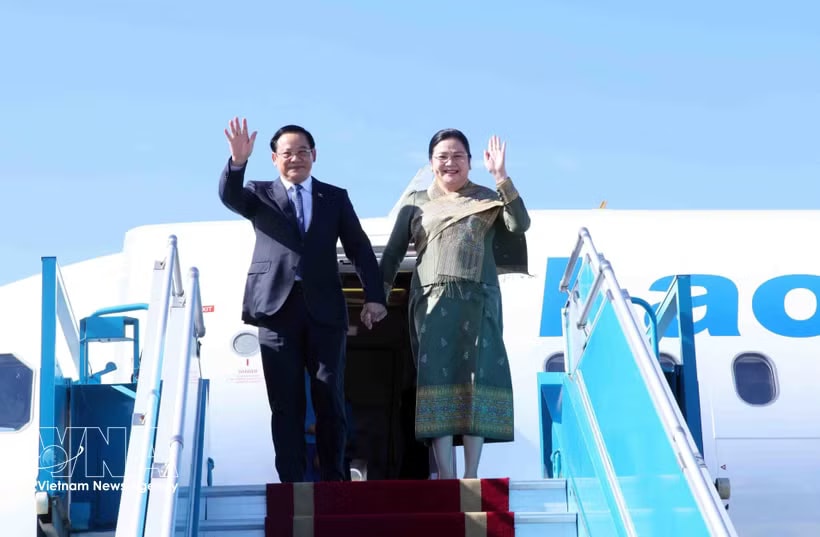
Hanoi (VNA) - Prime Minister of Laos Sonexay Siphandone arrived in Hanoi on June 7, beginning an official visit to Vietnam and attendance at the third ASEAN Future Forum (AFF) from June 7–9 at the invitation of Vietnamese Prime Minister Le Minh Hung.
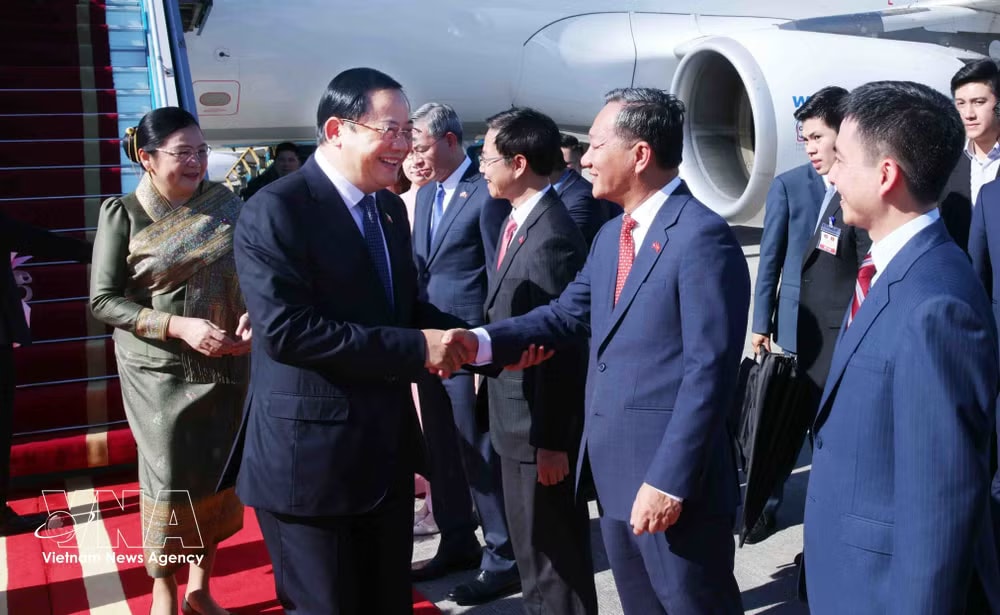
Welcoming the Lao PM and his entourage at Noi Bai International Airport were Minister of Finance Ngo Van Tuan and Deputy Minister of Foreign Affairs Ngo Le Van.
PM Sonexay is accompanied by his spouse, Vandara Siphandone, along with senior Lao officials, including Deputy Prime Minister and Minister of Education and Sports Thongsalith Mangnomek, Deputy Prime Minister and Minister of Defence Khamlieng Outhakaysone, Deputy Prime Minister and Minister of Foreign Affairs Thongsavanh Phomvihane, and Deputy Prime Minister and Minister of Finance Santiphab Phomvihane.
Spokeswoman of the Vietnamese Ministry of Foreign Affairs Pham Thu Hang noted that Vietnam–Laos relations have continued to be strengthened and grow in a substantive and effective manner across all fields. The two countries give special importance and the highest priority to their relationship, with the addition of the concept of “strategic cohesion” to further define bilateral ties in the new context.
Vietnamese Ambassador to Laos Nguyen Minh Tam described the visit as particularly significant, building on the success of the historic state visits exchanged by the top leaders of the two Parties and countries earlier in 2026.
He said the visit demonstrates the consistent determination of high-ranking leaders to further deepen bilateral relations and concretise the “strategic cohesion” of the special relationship.
Lao Ambassador to Vietnam Khamphao Ernthavanh also stressed that Vietnam and Laos share a profound historic bond that transcends conventional diplomacy, serving as a link for common development and security.
She noted that bilateral relations have advanced to a new stage through strategic cooperation frameworks for the 2026–2030 period, reflecting both countries’ commitment to translating political agreements into tangible outcomes and enhancing regional resilience./.