

It is proposed to grant military command positions the authority to decide on the requisition and appropriation of assets
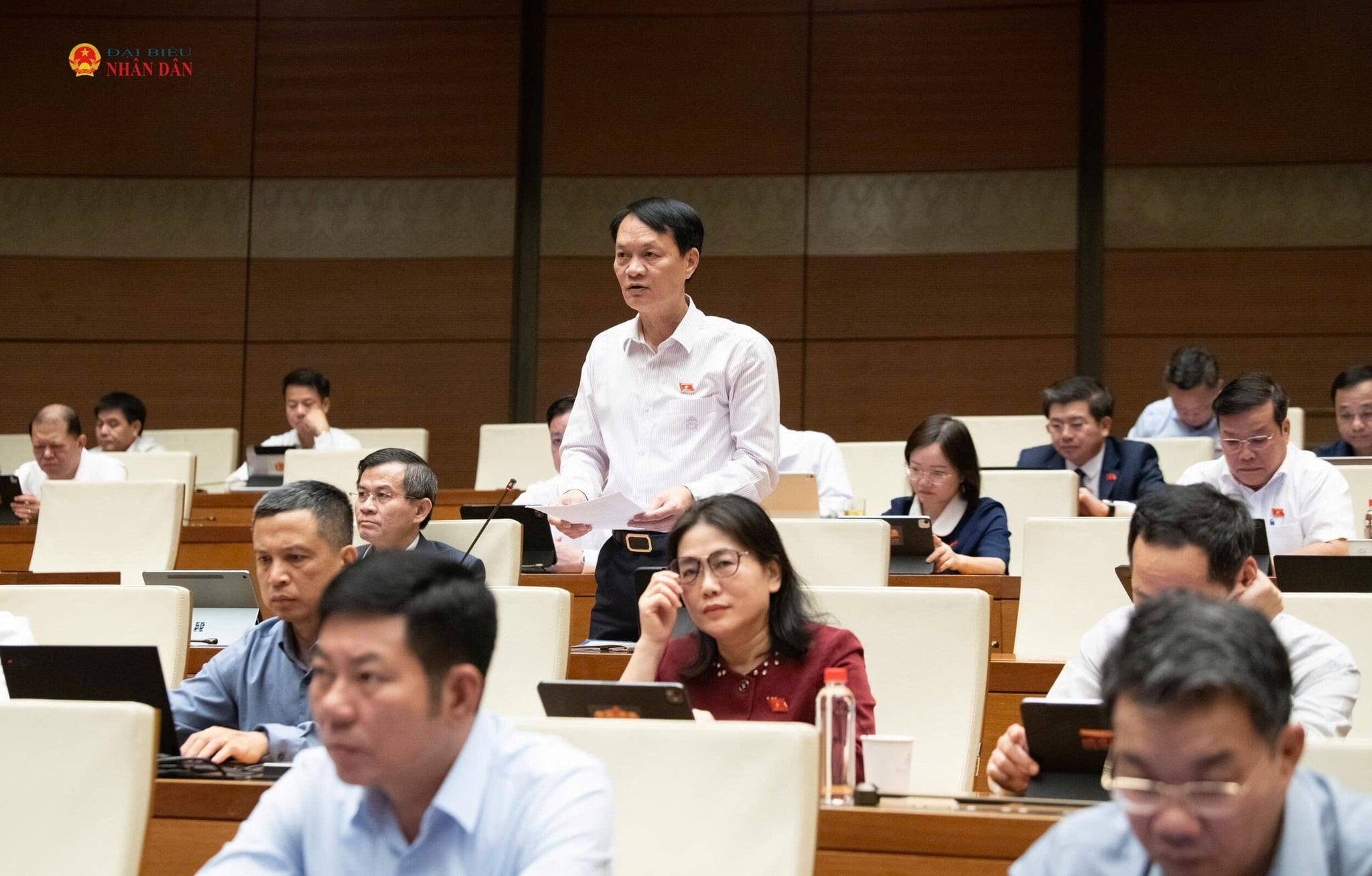
Speaking at the National Assembly's plenary session this morning, November 3rd, on the draft Law on the Purchase and Requisition of Assets (amended), National Assembly Deputy Luong Dinh Hung (Nghe An) proposed studying the possibility of adding the authority to decide on the purchase and requisition of assets to certain commanding positions in the Army, or assigning the Minister of National Defense the authority to make direct decisions, decentralizing and delegating power within his scope of management; and clarifying the cases of "truly necessary" in the purchase and requisition of assets.
Clarifying the circumstances of "absolute necessity" in the requisition and appropriation of property.
Highly appreciating the preparation of the draft Law, National Assembly Deputy Luong Dinh Hung acknowledged that the National Assembly Office had compiled in detail and fully the 51 opinions of National Assembly deputies at the group discussion session on October 23; the Ministry of Finance , the lead drafting agency, had promptly researched and planned the method of incorporating and explaining the 10 review points of the Committee on Law and Justice, along with the 51 contributions to the draft Law.
According to the delegates, the draft law was meticulously and thoroughly prepared by the Government and the Ministry of Finance, incorporating numerous opinions from review and assessment processes, ensuring compliance with legal regulations on the promulgation of normative legal documents.
The draft law has institutionalized the Party's guidelines and policies, especially Conclusion No. 119-KL/TW of the Politburo on issues related to human rights and civil rights, and Conclusion No. 09 on granting authority coupled with power control. At the same time, the draft has many new points in clarifying the cases, conditions, authority, procedures for requisitioning and appropriating property, and the responsibility for compensation to those whose property is requisitioned or appropriated.
"It is necessary to more clearly define the competent authorities for requisitioning and appropriating property within the Law (Articles 17 and 24), by adding: "Commanders of units at the regiment level and equivalent or higher; Commanders of provincial military commands; Commanders of commune military commands; Border guard station chiefs; or the Minister of National Defense may directly decide or delegate authority within their scope of management", National Assembly Deputy Luong Dinh Hung (Nghe An) said.
The draft is also consistent with the two-tiered local government model, supplementing policies for those mobilized to operate and manage requisitioned assets, and fundamentally addressing the limitations and shortcomings arising in practice, especially in disease prevention and control and disaster relief.
Delegates argued that, after being passed by the National Assembly , the Law will create a fundamental legal basis for competent authorities at all levels to requisition and appropriate assets in accordance with the provisions of the Law on Emergency Situations, the Law on Civil Defense, and the Law on Disaster Prevention and Control; especially the provisions on mobilization, general mobilization of industry, and the requisition, purchase, and appropriation of assets in a state of war, a state of emergency in national defense, or martial law under the Law on National Defense.
Commenting on Clause 1, Article 7 of the draft Law, Representative Luong Dinh Hung agreed with the provision regarding cases of requisitioning or appropriating property for reasons of national defense, security, or national interest, in emergency situations, or for disaster prevention and control. The representative argued that the provision regarding "truly necessary" cases in this clause is fundamentally appropriate and meets practical requirements.
However, to further clarify this concept within the Law, the representative proposed that the National Assembly direct the lead agency responsible for verification and the lead agency responsible for drafting to research and consider adding a definition of terms in Article 3 regarding the case of "absolute necessity" in the requisition and appropriation of property.
According to the representative, these are emergency situations as stipulated by current law where the requisition and appropriation of property by the competent authority is decisive in order to protect national interests; national security; borders, seas and islands; public property, rights and interests; the community; and the property and lives of the people.
"If the decision to requisition or seize assets is not implemented immediately, it will lead to serious and irreparable damage," the representative emphasized.
The law should clearly define the entities authorized to requisition or expropriate property
Regarding the authority to requisition and seize property, National Assembly Deputy Luong Dinh Hung highly appreciated the draft Law's efforts to promote decentralization and delegation of power to the Chairman of the People's Committee at the commune level in certain cases; and to allow authorized persons to delegate or assign authority to deputies to ensure timeliness in urgent situations and when absolutely necessary.
However, delegates argued that the Law should more clearly define the entities authorized to requisition or expropriate property, ensuring compliance with Clause 2, Article 14 of the 2013 Constitution, which states that human rights and civil rights can only be restricted by law.
According to the delegates, this requirement is particularly necessary when the country is in a state of war, a national defense emergency, a high-level civil defense situation, and other emergencies.
Therefore, delegate Luong Dinh Hung proposed adding to Articles 17 and 24 of the draft Law the authority to decide on the requisition and appropriation of assets for certain commanding positions in the Army, local military agencies, and Border Guard; or assigning the Minister of National Defense the authority to make direct decisions, decentralizing and delegating power within his scope of management.
According to the delegates, clearly defining the authority within the Law aims to ensure the ability to mobilize forces and promptly handle situations in wartime or national defense emergencies in the areas and regions where the military is assigned tasks.