

Identifies 29 technology challenges at commune level to support grassroots officials
Minister of Science and Technology Vu Hai Quan said the ministry had identified 29 specific technology-related problems faced by commune-level officials and would develop training materials and technical guidance to improve their digital skills. The ministry is also working to strengthen AI governance, data security and interoperability between digital systems.

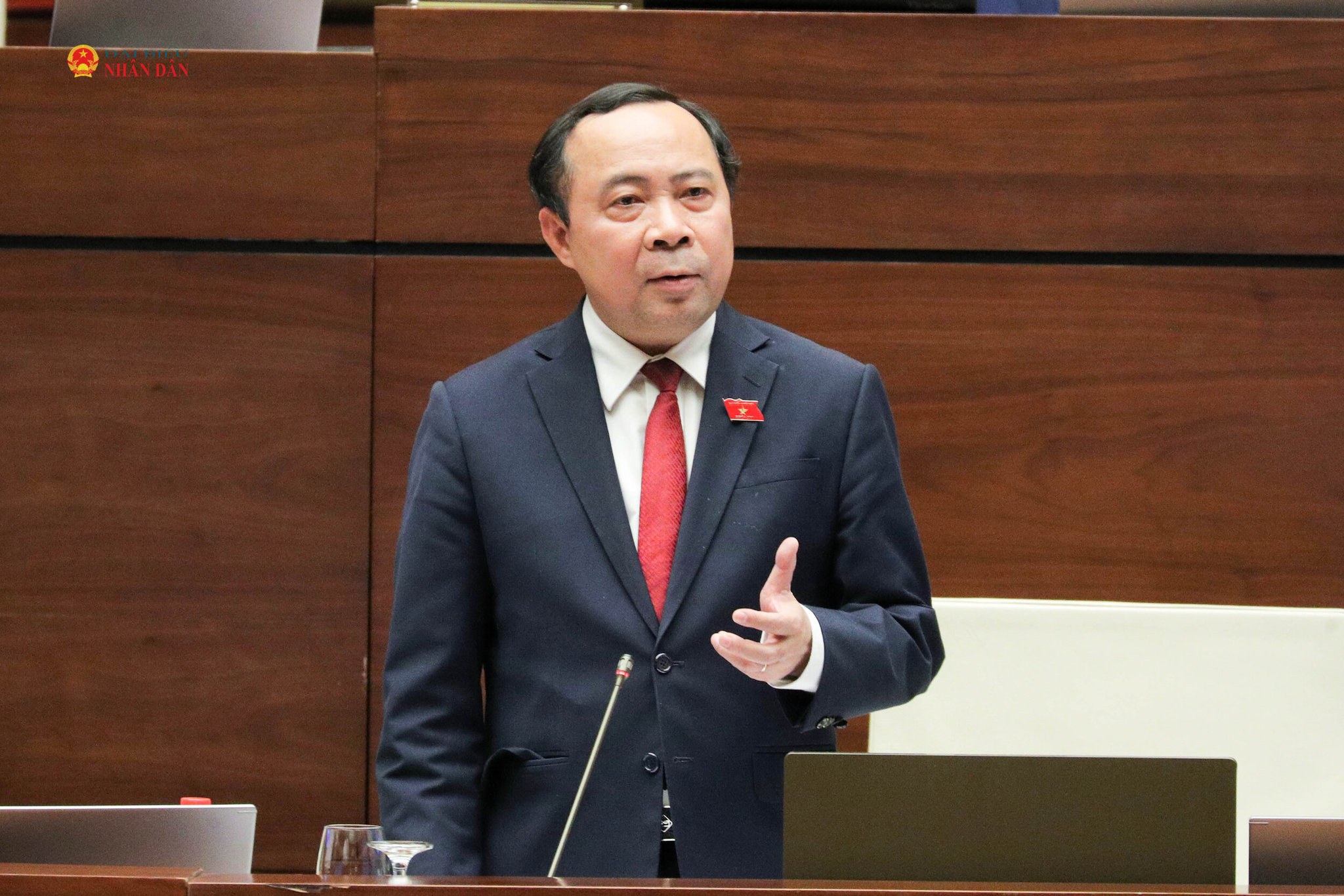
The National Assembly continued its question-and-answer session on science and technology on the morning of November 12, with Minister of Science and Technology Vu Hai Quan responding to lawmakers' questions under the chairmanship of National Assembly Chairman Tran Thanh Man.
National Digital Architecture Framework issued
National Assembly deputy Nguyen Van Huy (Hung Yen) pointed out that although the national data integration and sharing platform had recorded nearly five billion transactions, 34 of the country's 104 databases had yet to be synchronised with the National Data Centre. Furthermore, seven of the eight connected key databases were still being synchronised offline.
As a result, citizens continued to be asked to provide information that government agencies already possessed.
Responding to the concerns, Minister Vu Hai Quan said that data had been stored across different agencies and organisations for many years, making consolidation and synchronisation a complex process. Digitisation costs also varied depending on the type of documents, while human resources remained limited.
He identified five main reasons for the difficulties: inadequate connectivity and synchronisation between systems; inconsistent administrative procedures and forms; incomplete data; insufficient equipment, internet infrastructure and technical support; and limited digital skills among some citizens and grassroots officials.
To address these problems, the Ministry of Science and Technology has issued the National Digital Architecture Framework and conducted surveys in several localities to identify practical difficulties encountered by commune-level officials.
The ministry has also launched a pilot programme supporting commune-level officials and civil servants in applying science and technology and implementing digital transformation. The programme is expected to conclude in early 2027.
Balancing AI development with data protection
National Assembly deputy Ma Thi Thuy (Tuyen Quang) raised concerns about the risks associated with AI, including data security, privacy, information reliability and legal accountability. She called for measures that would encourage innovation while ensuring effective risk management, particularly to prevent older people, persons with disabilities and other vulnerable groups from being left behind in digital transformation.
In response, Minister Vu Hai Quan said Vietnam had enacted the Law on Artificial Intelligence, which places emphasis on data security and risk management. Public officials, civil servants and public employees are not permitted to upload classified information to AI platforms. Highly confidential data must be strictly controlled, while certain types of data used for non-commercial research may be accessed under specific conditions.
He said the greatest challenge was striking a balance between protecting data and taking advantage of opportunities offered by AI.
For instance, allowing AI systems to access an online newspaper's content could increase website traffic but might also undermine the publisher's control over its data. Conversely, restricting AI access could affect readership and traffic.
The ministry has therefore developed an AI ethics framework, classified risks and issued recommendations to help businesses and technology developers deploy AI safely and responsibly while encouraging innovation.
Ensuring data accuracy, security and transparency
National Assembly deputy Le Hoang Anh (Gia Lai) asked about the roadmap for consolidating duplicate digital applications under a single management system, adopting a single digital identity account and stopping new projects that duplicate existing national platforms.
Minister Vu Hai Quan said the Government had set a target of completing the data platform by 2030, enabling citizens to carry out administrative procedures entirely online.
Providing further information, Minister of Public Security General Luong Tam Quang said that nine of the 12 key databases and 80 of the 104 specialised databases had been completed.
The National Data Centre No. 1 has been operational since August 2025, while the national population database is connected to 17 ministries and sectors and 34 localities. The system has handled 2.77 billion information access, lookup and verification transactions, generating savings of nearly VND8.5 trillion for the state budget.
The VNeID application now has more than 86.4 million citizen digital identity accounts and offers 85 utilities. Since May 29, 2026, the Ministry of Public Security has also taken over the national public service system, which has received nearly 35 million applications.
As the standing agency responsible for implementing Resolution No. 57, the ministry is coordinating with ministries, sectors and local authorities to complete data cleansing and assess the security and safety of systems connected to the National Data Centre. The entire data system is expected to be completed and put into operation in the second quarter of 2027.
Emphasising the principles guiding data management, Minister Luong Tam Quang said information should be provided once and reused multiple times. Citizens should not be asked to resubmit data already held by government agencies. Data must be shared and managed with accuracy, integrity, confidentiality, security and transparency, with every change recorded to ensure it remains “accurate, sufficient, clean, live, consistent and shared”.