

Hanoi aims to raise tourists' night-time spending to 30%
Hanoi plans to develop night-time economy zones, corridors and public spaces centred on heritage, culture, creativity and visitor experiences to increase the value of its tourism industry, with an aim to raise the proportion of tourist spending at night to 25-30% of total travel expenditure.
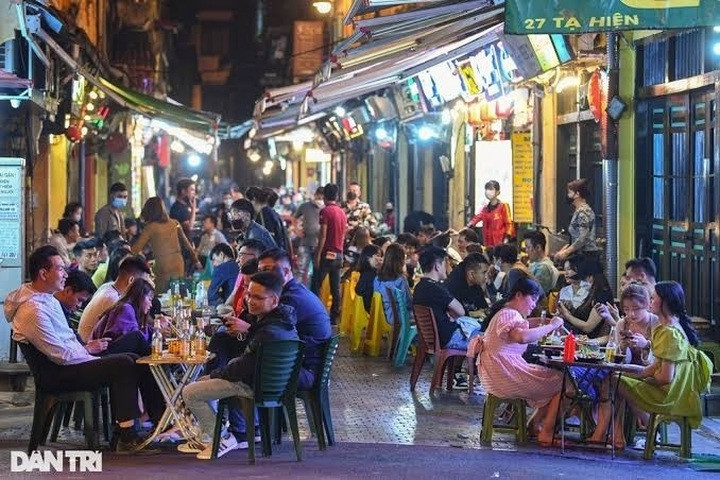
According to a plan of the municipal People’s Committee dated July 15, 2026 to implement the municipal People's Council's resolution on developing the capital's night-time economy, by 2030 the city aims to make the night-time economy a major driver of its service sector, contributing around 5% of Hanoi's GRDP while gradually increasing its share of budget revenue. The city also aims to extend the average visitor stay to 2.5-3.5 days.
Hanoi will establish and operate flagship night-time economy zones supported by preferential policies, including heritage and cultural districts in Hoan Kiem, Cua Nam, Ba Dinh, Son Tay and Soc Son; modern entertainment hubs in Tay Ho-West Lake West, My Dinh and Dong Anh; creative economy zones linked to cultural industries such as theatres, cinemas and museums; and cultural tourism and resort destinations in suburban craft villages including Bat Trang, Ba Vi and Huong Son.
The city also plans to develop themed night-time economy corridors featuring iconic attractions rooted in Hanoi's heritage, arts, cuisine and urban identity, including the Thang Long-Tu Tran heritage route and food streets such as Tong Duy Tan and Ta Hien.
Cultural industry centres and creative spaces will be expanded in areas including Dong Xuan-Bac Qua, Cua Nam, Tay Ho, Dong Anh, the Bat Trang Ancient Village Ecological Museum, and the Vietnam National Village for Ethnic Culture and Tourism.
Suburban areas will develop night-time tourism linked to traditional craft villages, cultural and historical sites, agricultural tourism and experiential travel, alongside night markets specialising in agricultural products, local specialties and OCOP products.
Hanoi will manage these night-time economy zones through the city's Intelligent Operations Centre (IOC) integrated with the iHanoi digital ecosystem, while encouraging all businesses operating in these areas to adopt cashless payments and share data to support smart urban management.
To achieve these goals, the city will launch a broad communication campaign to raise public awareness of the role of the night-time economy in economic, cultural and tourism development.
The plan also seeks to position Hanoi as "the region's leading distinctive night-time economy destination", capitalising on its unique strengths in heritage, culture and creativity. A unified branding system and dedicated digital communications ecosystem will be developed to promote the capital's night-time identity.
Authorities will standardise administrative procedures for establishing and managing night-time economy zones, while building digital databases and interactive maps to support planning, supervision, promotion and connectivity.
Licensing procedures will also be overhauled through a pilot one-stop integrated licensing mechanism, replacing fragmented sector-based approvals. The city aims to cut administrative procedures by 50%, clearly categorising activities that require standard licensing, additional conditions or pilot-only approval, while ensuring greater transparency and making investment more attractive.
Other measures include improving infrastructure for the night-time economy, introduction of late-night bus services connecting major night-time economy hubs, expanding urban artistic lighting system, and increasing open-air night-time arts spaces in major parks.
A comprehensive digital database and interactive map of Hanoi's night-time economy will underpin planning, management, marketing and operations. The platform will provide information on venues, opening hours, available services, visitor density, parking, transport links, live events, safety conditions and other visitor services.
The city also plans to establish an integrated monitoring system aligned with its Smart Hanoi initiative, combining 3D GIS, urban databases and real-time sensor data from AI-powered cameras and noise, lighting and activity-density sensors to ensure the safe operation of the night-time economy.