

General Secretary Tô Lâm: Build a modern, unified, stable and feasible legal system that facilitates development
Providing strategic direction for the National Assembly’s activities in the coming period at the opening of its first session, General Secretary Tô Lâm called on the legislature to vigorously reform its law-making work and build a modern, unified, stable and feasible legal system that facilitates development.
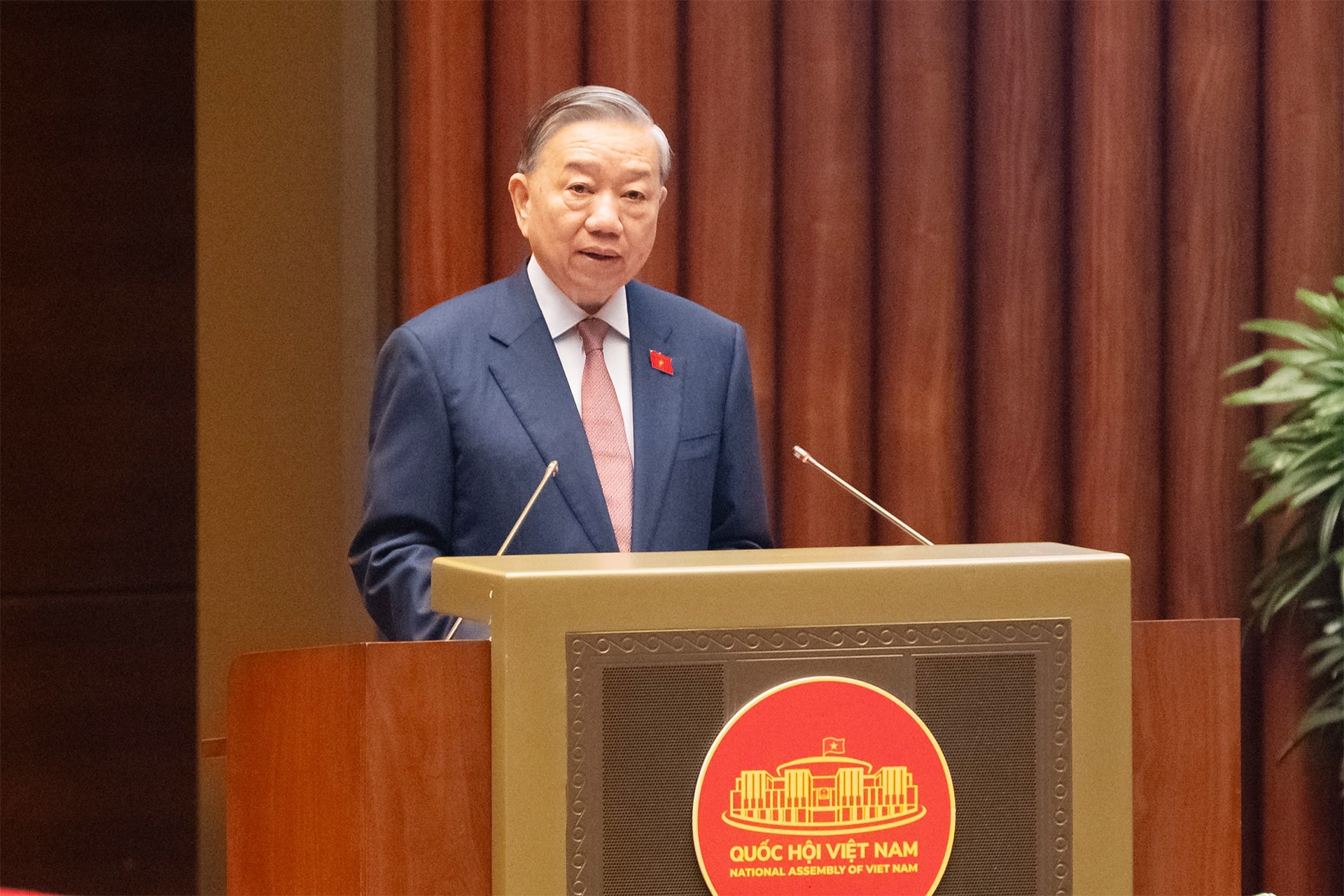
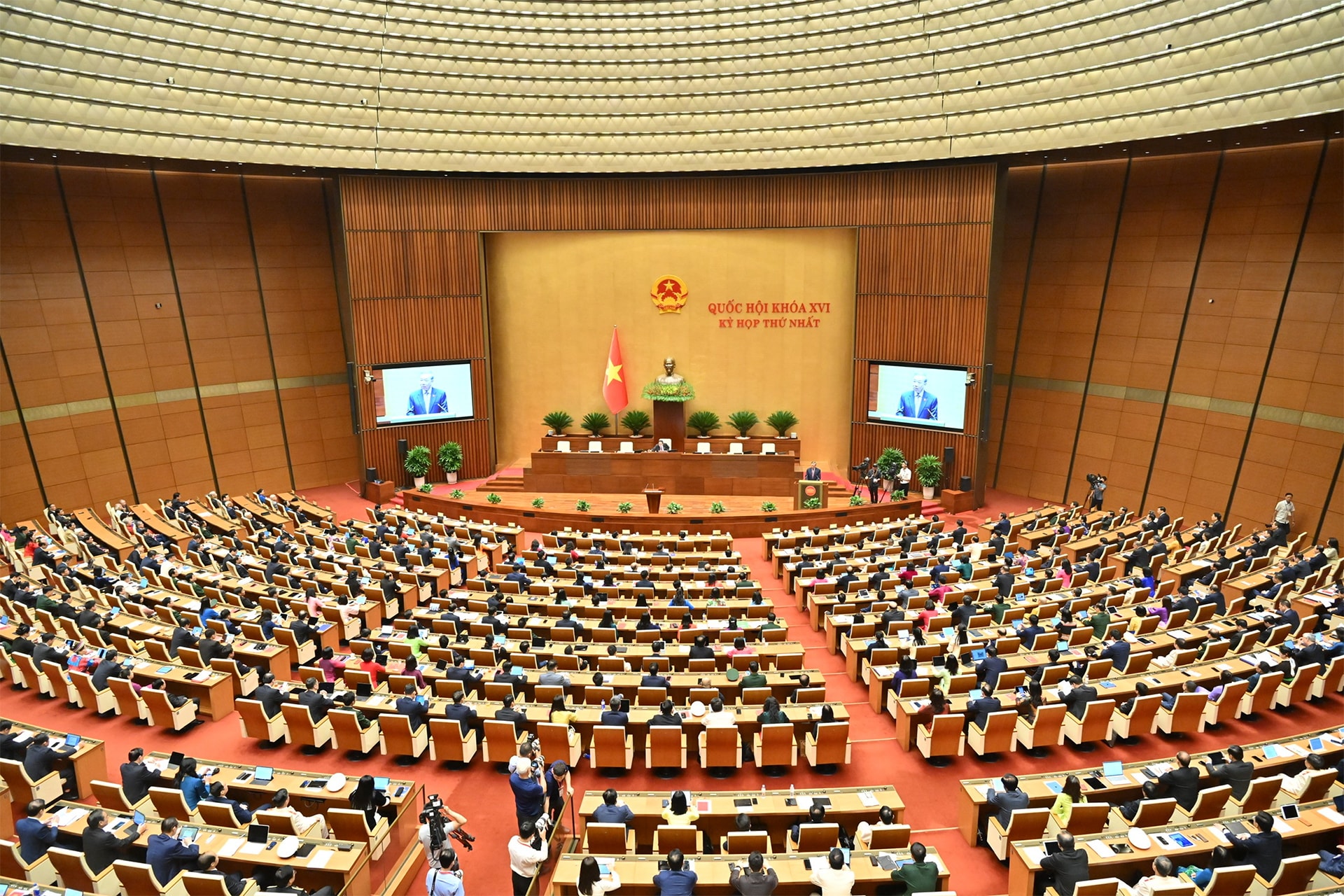
As reported by Đại biểu Nhân dân Newspaper, the 16th National Assembly solemnly opened its first session this morning, April 6. General Secretary Tô Lâm attended and delivered an important address outlining strategic directions for the legislature’s activities in the coming period.
The National Assembly must pursue stronger, more substantive and more effective reforms
In his address, General Secretary Tô Lâm affirmed that the first session of the 16th National Assembly was of particular importance, marking the beginning of a new term for the highest representative body of the people and the highest organ of state power in Vietnam.
The session will consolidate the organisational apparatus of the State in accordance with the Constitution. It will also focus on institutionalising the Resolution of the 14th National Party Congress, thereby creating the legal and institutional foundations and policy impetus for the country to enter a new stage of rapid, sustainable and culturally distinctive development, driven by science and technology, innovation and the entire nation’s powerful aspiration to advance.
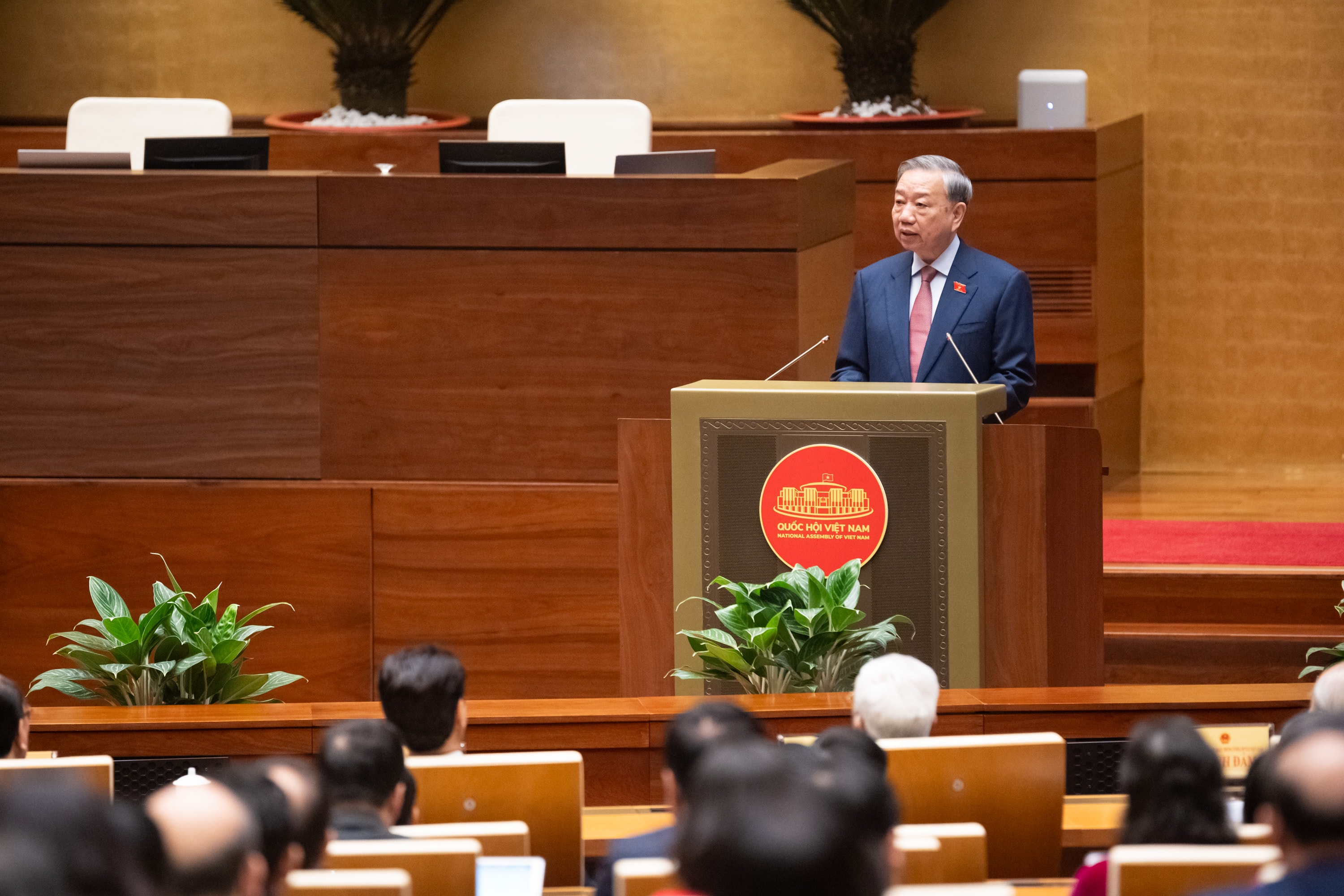
On behalf of the Party Central Committee, the General Secretary warmly congratulated the country on the highly successful election of deputies to the 16th National Assembly and People’s Councils at all levels for the 2026–2031 term. He also congratulated those elected by voters nationwide, noting that their election was a great honour but also entailed an immense responsibility to the Party, the people and the country’s future.
The General Secretary observed that the world was undergoing rapid and profound changes in both scope and depth. Strategic competition among major powers was becoming increasingly intense, while the international order and international law were facing numerous challenges. Global supply chains, capital flows, technologies and markets were being restructured. Traditional and non-traditional security challenges were becoming intertwined, exerting an increasingly direct impact on the environment and development space of every country. In particular, breakthroughs in artificial intelligence, big data and digital technologies, along with other scientific and technological advances, were fundamentally transforming production methods, growth models, national governance and social life.
“In this context, those countries that adopt a proactive strategic approach, undertake timely institutional reforms, unleash creativity, mobilise resources from the entire population and seize emerging opportunities will move ahead and prosper,” the General Secretary emphasised.
The 14th National Party Congress clearly defined the country’s development objectives for 2030 and its vision towards 2045, while emphasising the need to renew development thinking, unlock all resources and maximise the strength of the great national unity bloc. In this process, the General Secretary stressed, the National Assembly must undertake stronger, more substantive and more effective reforms to fully and worthily discharge its constitutional responsibilities.
“The National Assembly embodies the will, aspirations and right to mastery of the people. It decides the country’s major issues and translates the Party’s guidelines into laws, policies and the organisational capacity for practical implementation. Every National Assembly deputy must remain profoundly aware that they represent not only their constituency and carry not only the confidence expressed through voters’ ballots, but also bear responsibility for the nation’s destiny, the people’s trust and the future of generations to come,” the General Secretary emphasised.
Laws must not only “pave the way” but also “repair the road”
In that spirit, General Secretary Tô Lâm asked the 16th National Assembly to focus on successfully performing four major tasks.
First, it must vigorously reform law-making work and build a modern, unified, stable and feasible legal system that facilitates development.
The National Assembly must further strengthen its capacity to institutionalise and translate Party resolutions into policies and laws, thereby creating a solid legal framework for the successful implementation of socioeconomic development tasks during the 2026–2031 period and beyond. The legal system must genuinely become the institutional foundation for development, an instrument for protecting human and citizens’ rights, and a driving force for advancing innovation, unleashing productive forces and opening up new development spaces for the country.
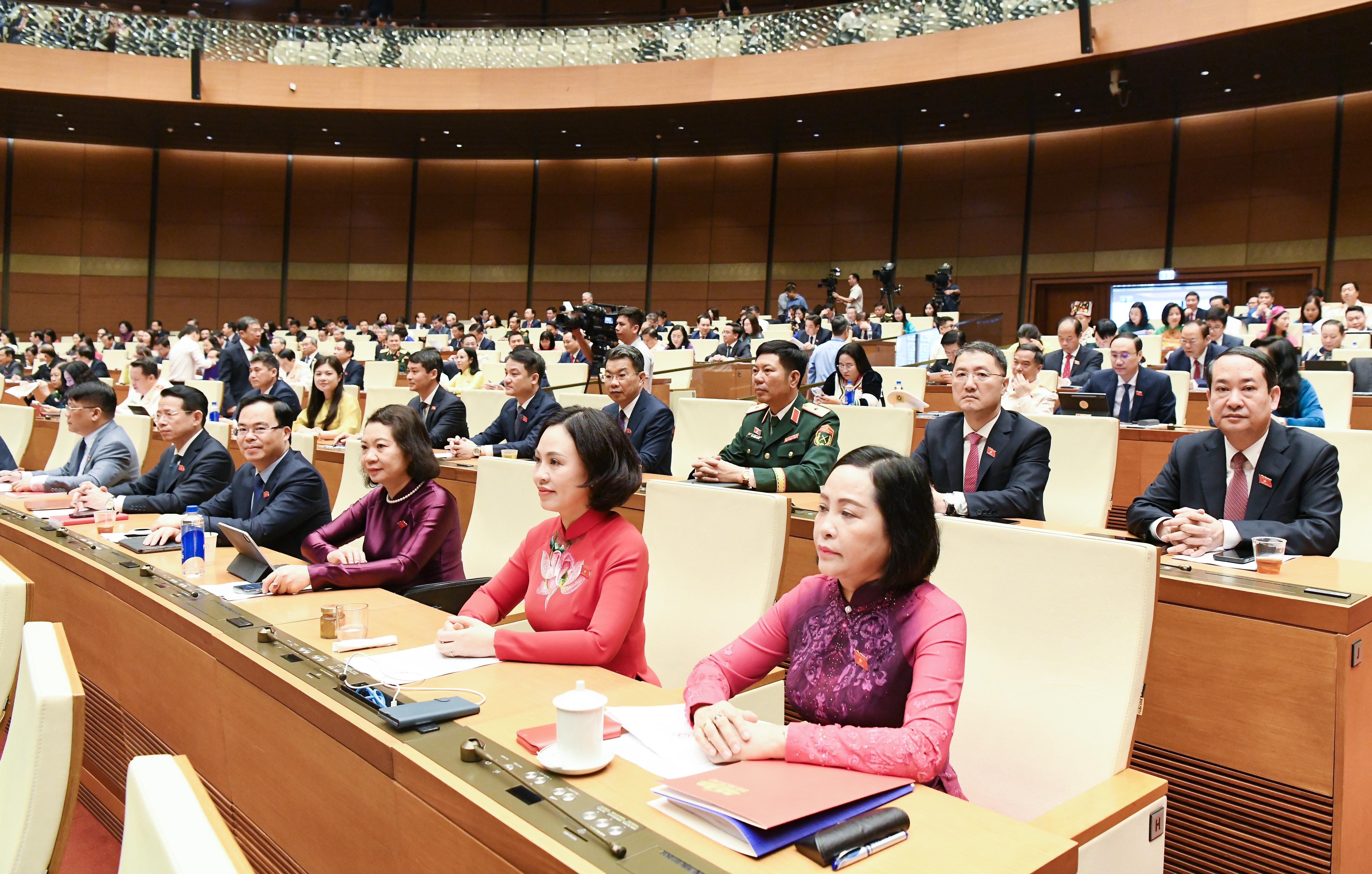
According to the General Secretary, although the legal system had been significantly improved in recent years, overlaps, contradictions and a lack of consistency remained. Certain regulations were unclear, unstable or had failed to keep pace with reality, increasing compliance costs, delaying development opportunities and creating difficulties for people, businesses and implementing agencies.
“The National Assembly must therefore direct a comprehensive review of the legal system, improve the structure of the national legal framework and resolutely address restrictive and overlapping laws, as well as the practice of shifting responsibilities to subordinate legislation. Laws must be capable of entering into force effectively, easy for people to understand, straightforward for businesses to comply with and convenient for state agencies to apply.
“In particular, the law-making mindset must be fundamentally transformed towards facilitating development. The law must not merely regulate what already exists; it must also pave the way for what is new. It must not only govern current realities but also shape the future. Laws must not only ‘pave the way’ but also ‘repair the road’,” the General Secretary emphasised.
For emerging issues, sectors, models and productive forces, he called for an appropriate approach involving bold but controlled pilot schemes that create space for innovation and enhance national competitiveness.
The legislative process must be genuinely scientific, democratic and transparent, incorporating the views of experts and scientists, international experience, and input from businesses and the people. Every law must proceed from the interests of the country and nation and the people’s legitimate interests. Group and parochial interests, as well as any negative influence that distorts policy, must be resolutely prevented and combated.
There must be a decisive transition from the mindset of “making laws merely to complete the required framework” to “making laws for development,” and from having “good laws on paper” to having “good laws in practice.” Implementation effectiveness and the satisfaction of people and businesses must be the highest measures of legislative quality.
Focusing oversight on major issues, key sectors and the “most critical bottlenecks” to development
Second, the National Assembly’s supreme oversight must be elevated to become more substantive and incisive, pursuing accountability and results through to the end.
The General Secretary stressed that oversight was a critically important power of the National Assembly. It could not, however, stop at identifying limitations or pointing out shortcomings. Oversight must genuinely become an instrument for improving the effectiveness and efficiency of national governance. It must help correct deficiencies, improve performance, remove bottlenecks, provide early warnings of risks and spur action.
In other words, oversight must not only “examine what has been done” but also help “shape what needs to be done,” promptly identify potential shortcomings and pursue the ultimate question to its conclusion: has the problem been resolved?
The General Secretary asked the National Assembly during this term to focus its oversight on major issues, key sectors and the “most critical bottlenecks” to development, as well as pressing matters of concern to voters and the public. Particular attention should be paid to the implementation of the Party’s major policies, law enforcement, the use of national resources, public asset management, thrift practices, the fight against wastefulness and the accountability of state agencies.
Every oversight activity must be associated with clearly defined responsibilities, deadlines, outputs and results. Oversight must be based on data, evidence and quantitative indicators, with clear comparisons between the objectives set and the results achieved.
At the same time, the role of National Assembly bodies, provincial and municipal delegations of National Assembly deputies, and individual deputies must be vigorously promoted in oversight activities. Coordination must also be strengthened between National Assembly oversight and the Party’s inspection and supervision work, as well as state inspection, auditing and other oversight institutions. This will create combined strength to ensure that the state apparatus acts properly, swiftly and effectively.
Do not allow delays to become a bottleneck to development
Third, the National Assembly must demonstrate greater resolve and vision when deciding important national issues. Its decisions must be sound, well targeted, timely and serve the country’s long-term interests.
As the country enters a development phase of historic significance, the General Secretary stressed that the National Assembly must make decisions that are not only sound but also precisely targeted and timely, because a delayed decision could result in the loss of a strategic opportunity.
Issues concerning socioeconomic development, the state budget, public investment, national target programmes and nationally important projects all involve major decisions associated with the fundamental and long-term interests of the country and nation. They must be considered comprehensively, scientifically and prudently, but delays must never be allowed to become a bottleneck to development.
Given the country’s still-limited resources, the General Secretary stated: “The National Assembly must further improve the quality of policy analysis, strategic forecasting and impact assessment. It must correctly identify the major tasks, breakthrough areas, key projects and strategic sectors on which to concentrate resources, avoiding scattered, fragmented or equal distribution of investment. Investment must serve not only short-term growth but also create new growth drivers, new competitive capabilities and new development spaces for the country over the coming decades.”
Every decision of the National Assembly must be situated within the overall national development strategy, a rapidly changing international environment, and the requirements of safeguarding independence, self-reliance, security, safety and sustainable development. The National Assembly makes decisions for the present but must remain accountable to the future. This requires political resolve, strategic vision, legislative wisdom and the depth expected of the highest organ of state power.
Above all, the National Assembly must remain close to the people, understand them and act in their interests
Fourth, the organisation and methods of operation of the National Assembly must continue to be reformed towards greater modernity and professionalism, closer connections with the people and practical realities, and more responsive policymaking.
In a constantly changing world, the General Secretary said, the National Assembly could not continue operating at its previous pace or through outdated methods. It must become more adaptable, respond more promptly through policy and decide issues more rapidly while maintaining rigour and sound judgement.
Further consideration should be given to reasonably increasing the number of sessions and diversifying and making more flexible the forms of operation employed by the National Assembly and its bodies. Digital technologies, online working methods and digital ecosystems should be vigorously adopted to improve the timeliness, proactiveness and effectiveness of policy consideration and decision-making.
The quality and effectiveness of every National Assembly deputy’s activities must continue to be improved, particularly those of full-time deputies. The role of provincial and municipal delegations of National Assembly deputies must be further strengthened so that they genuinely serve as a close bridge between the legislature and voters and the people. Every deputy must possess political resolve, professional expertise, critical thinking skills and the capacity to faithfully convey the people’s voices to the parliamentary chamber.
“The National Assembly must maintain closer ties with the people; expand channels for receiving and listening to the opinions of voters, the public, the business community, intellectuals and scientists; and strengthen openness and transparency throughout its activities. It must build a digital, modern and intelligent legislature, but above all, it must be a National Assembly that remains close to the people, understands them, serves them and acts in their interests.
“When the people’s sentiments are heard, their opinions are faithfully reflected and decisions originate from the realities of their lives, the National Assembly will become stronger, the State more steadfast and social trust greater,” the General Secretary emphasised.
The 16th National Assembly has begun its term with immense responsibilities. The General Secretary expressed his confidence and expectation that every deputy would continuously strengthen their political resolve, improve their knowledge, capabilities and sense of responsibility, remain genuinely close and attentive to the people, understand and listen to them, and faithfully reflect their will and aspirations. Deputies must place the interests of the country and nation above all else in every decision. These are the essential qualities of a people’s representative in the new era.
“As our nation stands before historic new opportunities, we have every reason to believe firmly that, drawing upon the glorious 80-year tradition of the National Assembly of Vietnam; under the steadfast and wise leadership of the Party; with the unity and support of the people; through close coordination with the Government and the entire political system; and with the democratic, innovative, dedicated and responsible spirit of all National Assembly deputies, the 16th National Assembly will successfully fulfil the responsibilities entrusted to it by the Party, State and people.
“It will join the entire Party, people and armed forces in realising the aspiration to build a peaceful, independent, democratic, strong, prosperous, civilised and happy Vietnam that advances steadily towards socialism,” the General Secretary emphasised.