

General Secretary and State President Tô Lâm: Do not allow the people’s legitimate opinions to go unheard
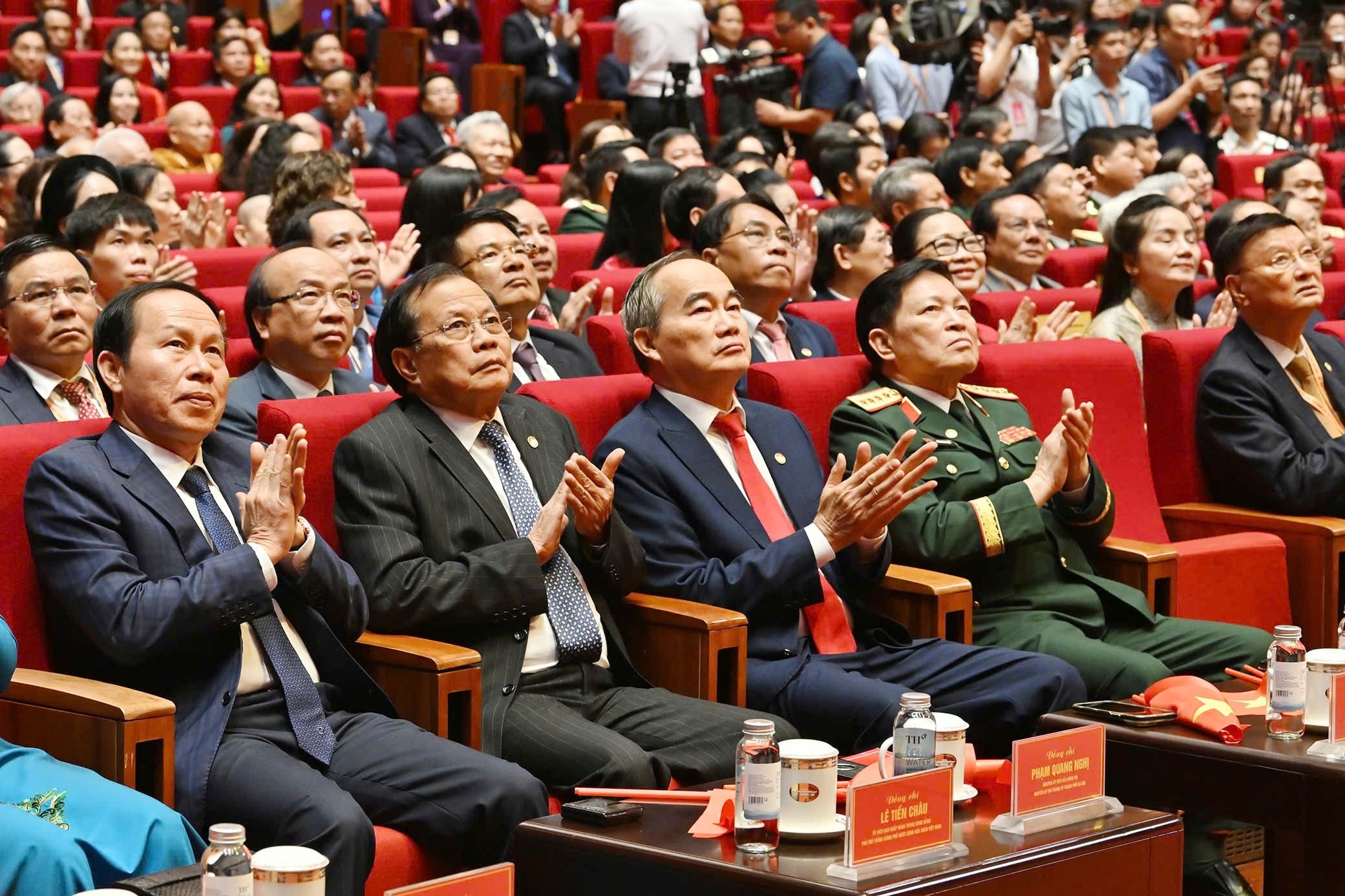
Addressing and delivering guidance at the 11th National Congress of the Vietnam Fatherland Front on the morning of May 12, General Secretary and State President Tô Lâm emphasised that the effectiveness of the Front’s work must be measured by the people’s trust. There must be a mechanism to follow through on the handling of recommendations arising from supervision and social criticism, ensuring that the Front’s recommendations do not simply remain on paper and that the people’s legitimate opinions do not go unheard.
When the people are united, the country can overcome every difficulty and accomplish extraordinary achievements
The General Secretary and State President affirmed that the Congress marked the beginning of a new stage in the Front’s development, with a new position, a new organisational model and new responsibilities. The Congress must clearly define what the Vietnam Fatherland Front should do and how it should act to remain a focal point for the people’s aspirations, reflect their opinions, protect their legitimate interests, mobilise their strength and promote the power of the great national unity bloc, thereby contributing to the successful achievement of the country’s development goals for 2030, with a vision towards 2045.
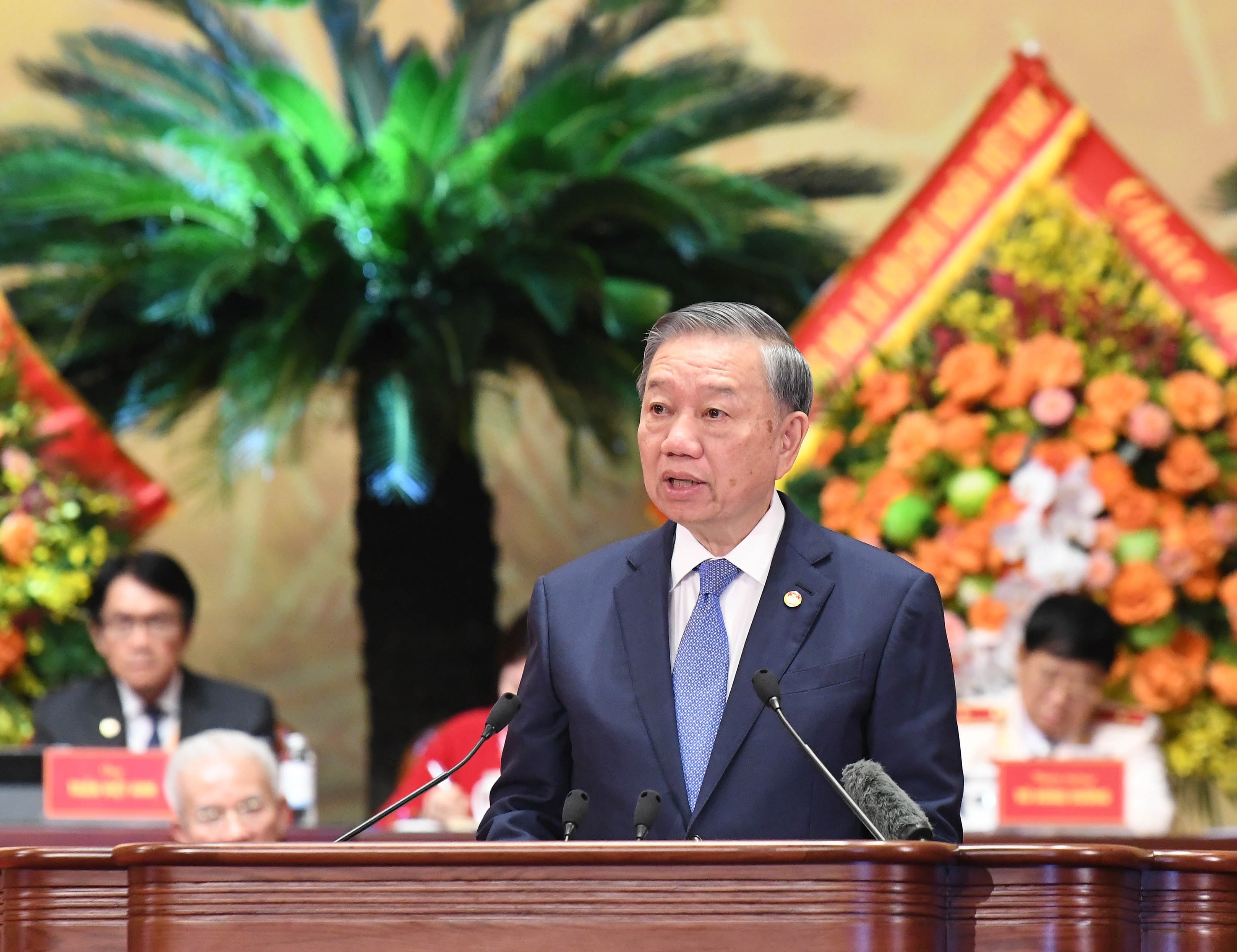
The General Secretary and State President expressed his strong support for the theme, orientations, objectives and action programme adopted by the Congress. Its theme clearly reflects the spirit of solidarity, democracy, renewal, innovation and development, while affirming the Vietnam Fatherland Front’s core political role in promoting democracy, the patriotic tradition and the strength of the great national unity bloc, and in building a strong, prosperous, civilised and happy country.
The General Secretary and State President stated that the nation’s history has demonstrated a fundamental truth: whenever the nation is united, the people rally together and the will of the entire population is aligned, the country can overcome every difficulty, defeat every enemy and accomplish enduring feats. Great national unity is a precious tradition, a strategic line of the Party and the source of Vietnam’s strength. Our Party is strong because of its close, inseparable bond with the people. Our State is steadfast because it relies on the people. Our political system is enduring because it is trusted, supported, protected and built by the people.
In the new era, he noted, great national unity is not merely a spiritual tradition but also a national development capacity. It is a source of strength for unlocking resources, unleashing creativity, building social consensus and defending the Fatherland proactively and from afar. Unity in the new period means respecting lawful and legitimate differences, harmonising interests, taking the common goals of the nation as shared ground and using the aspiration to build a peaceful, independent, democratic, strong, prosperous, civilised and happy Vietnam as the banner under which all patriotic Vietnamese people can rally.
The General Secretary and State President assessed that, despite the shortened term, Fatherland Front organisations at all levels and their member organisations had made tremendous efforts and achieved many important results. Acting on the directions of the Party Central Committee, the Front promptly streamlined and consolidated its organisational apparatus and made thorough and responsible preparations for its 11th Congress. At the same time, it gradually began operating under the new model while maintaining stable and uninterrupted operations.
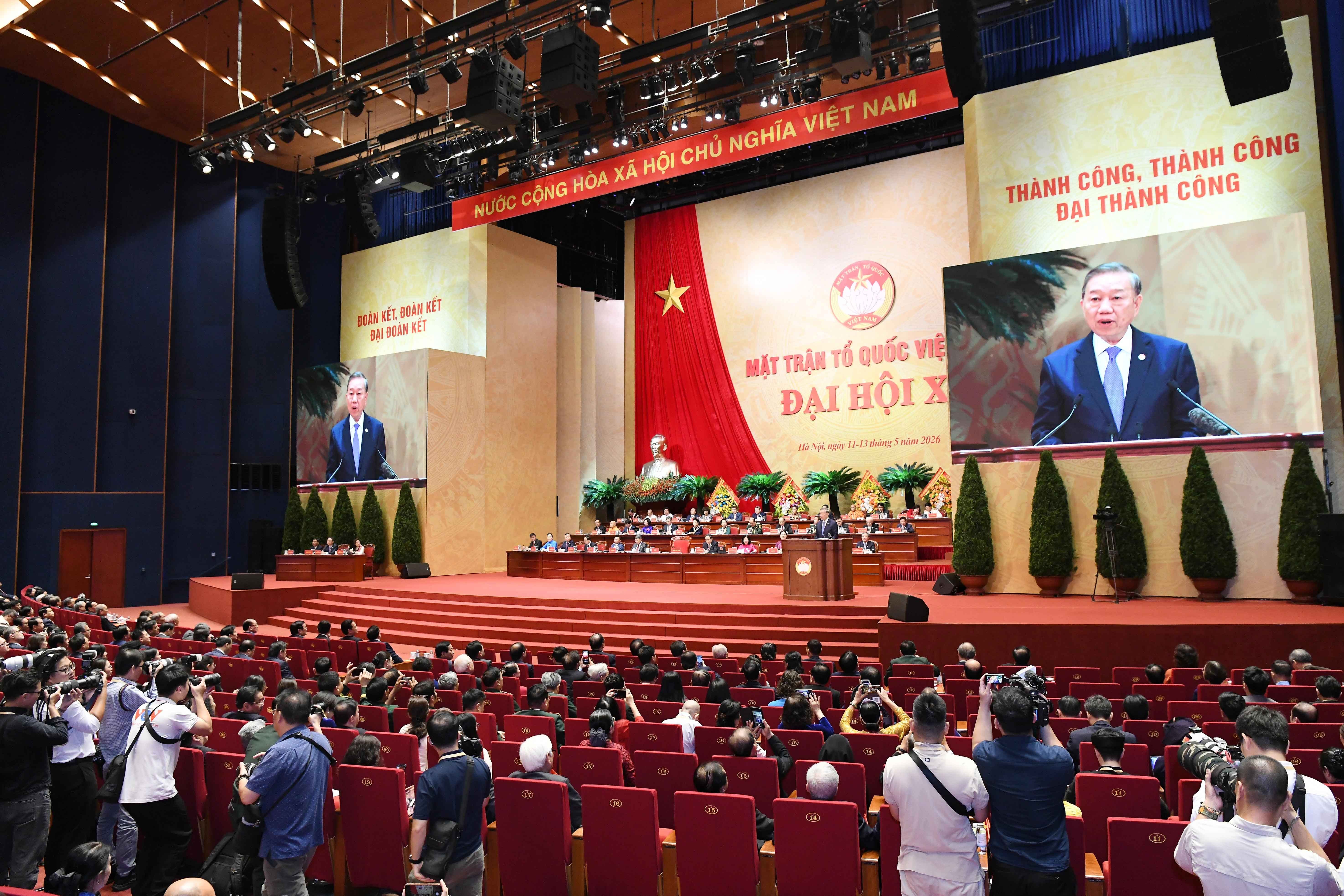
On behalf of the Party and State leadership, the General Secretary and State President acknowledged, warmly congratulated and commended the important achievements made by Vietnam Fatherland Front organisations at all levels, their member organisations, officials engaged in Front work, union and association members, and people from all walks of life.
Calling on the Vietnam Fatherland Front to face realities, speak frankly, make accurate assessments and adopt fundamental solutions to address the shortcomings identified, the General Secretary and State President stressed: “The Front cannot be strong if it is distant from the people. It cannot renew itself if renewal exists only in the wording of resolutions. It cannot represent the people if it fails to hear their genuine voices or speaks in a way they cannot understand. Nor can it conduct effective supervision and social criticism if it lacks resolve, data, experts and mechanisms for following legitimate recommendations through to their final resolution.”
The effectiveness of the Front’s work must be measured by the people’s trust
For the 2026–2031 term, on behalf of the Party and State leadership, the General Secretary and State President highlighted five key groups of tasks for delegates to discuss, consider and decide upon.
First, the Front must thoroughly embrace the principle that “the people are the roots,” recognising the people as the principal actors and the centre of the cause of renewal and development. This must serve as a consistent principle throughout all aspects of the Front’s work.
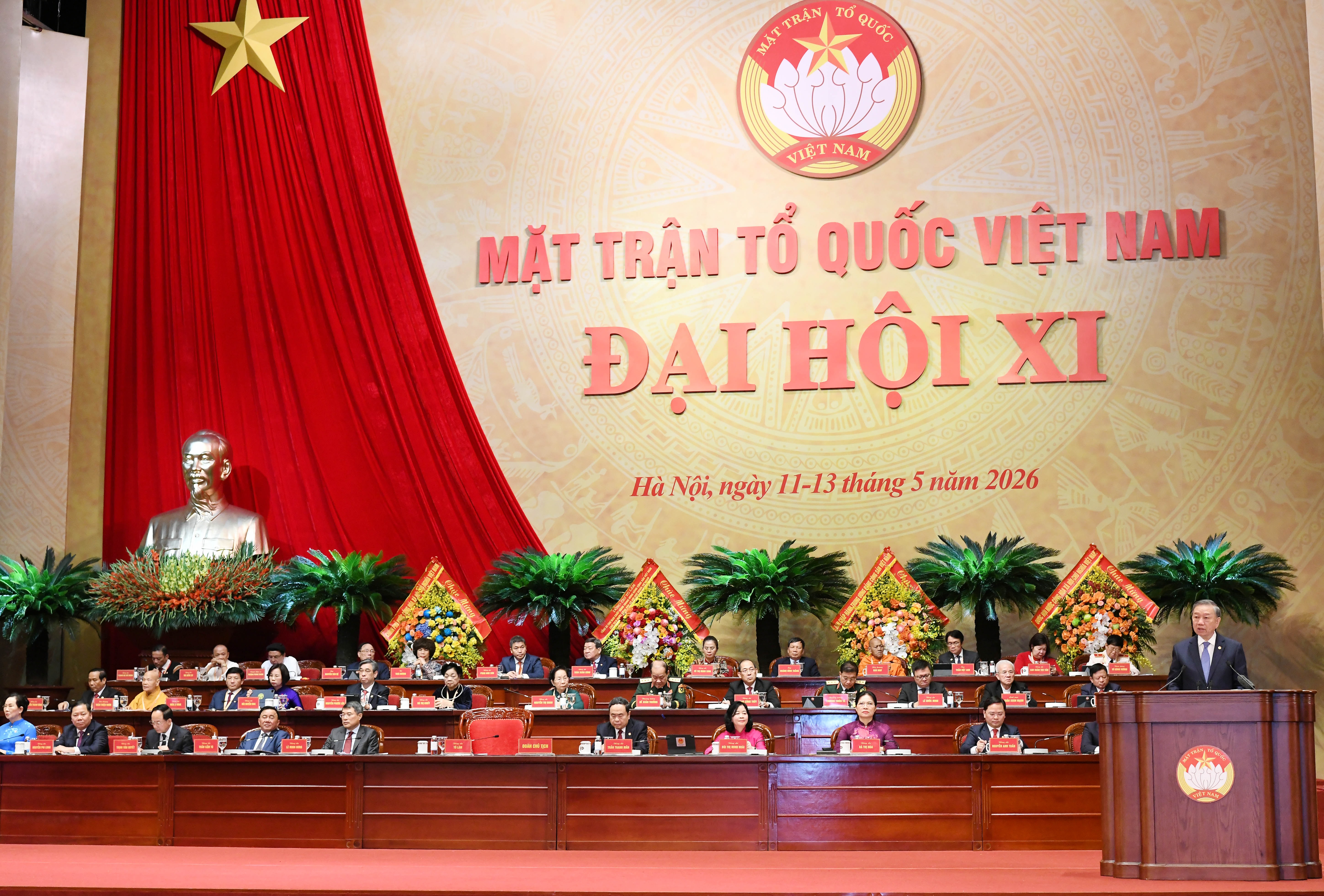
The General Secretary and State President stressed that every Party guideline, State policy and law, as well as every programme, movement and campaign of the Front, must originate from the people’s needs, aspirations and lawful and legitimate rights and interests. All must be directed towards improving the people’s material and spiritual well-being and happiness.
The Front must place the people at the centre of all its activities; rely on the people in building the Party, the State and the political system; promote the people’s right to mastery; and substantively implement the principle that “the people know, the people discuss, the people act, the people inspect, the people supervise and the people benefit.”
“The effectiveness of the Front’s work must not be measured solely by the number of meetings, documents, movements or launching ceremonies. It must instead be measured by the people’s trust and satisfaction, the extent of their participation, the ability to protect their lawful and legitimate rights and interests, and tangible results in continuously improving their lives.
“The Front must both bring the Party’s sound guidelines and the State’s appropriate policies to the people and convey the people’s voices, aspirations, initiatives and legitimate concerns to the Party and State,” the General Secretary and State President emphasised.
The Front must not take over the State’s work, still less allow its operations to become bureaucratised
Second, the Front must renew its methods of bringing people together, mobilising them and promoting the strength of the great national unity bloc. Vietnamese society is changing rapidly. The composition of social classes and groups, occupations, forms of employment, living environments and ways in which people access information are becoming increasingly diverse. Alongside traditional residential communities, there are industrial parks, workers’ boarding-house areas, professional communities, business associations, cyberspace, overseas Vietnamese communities and newly emerging social groups.
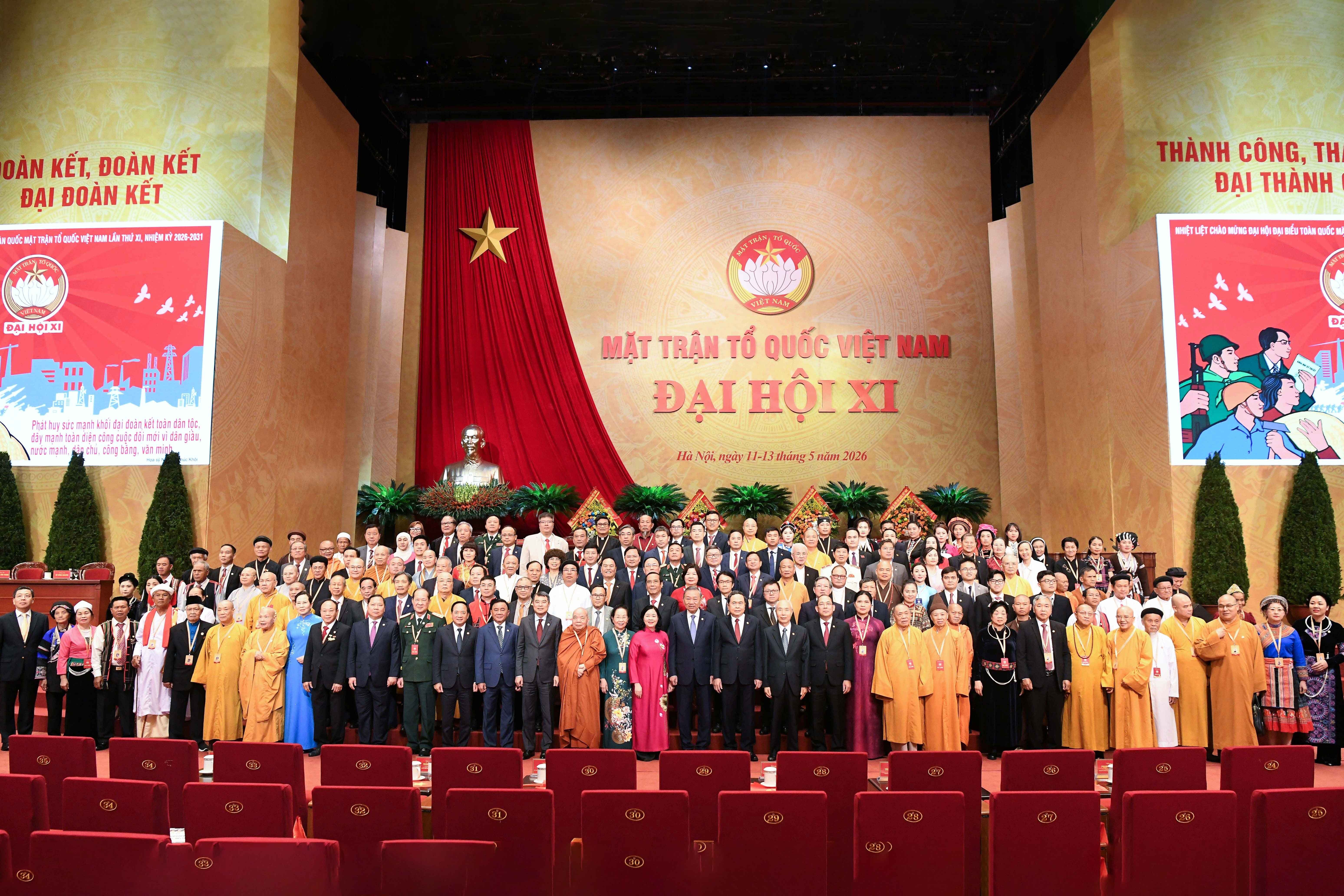
The General Secretary and State President therefore called for the renewal of methods used to mobilise and unite the people. Mobilisation cannot be conducted solely through conferences, documents and slogans. It must be pursued through dialogue, persuasion, practical benefits, exemplary conduct, tangible results and the ability to resolve issues of concern to the people.
Every programme, movement and campaign of the Front must move decisively from general launching activities to concrete implementation, from slogans to results and from formality to substance. They must be easy to understand, remember and carry out, with clearly defined objectives, responsibilities and deadlines, as well as measurable results and impacts on the people’s lives.
“The Front must not take over the State’s work or that of its member organisations, still less allow its operations to become bureaucratised. It must properly fulfil its core political role: bringing people together, conducting consultations, coordinating, supervising, offering social criticism, caring for and protecting the people, and promoting their strength. Under the new organisational model, the structure may be leaner, but its capacity to unite people must be broader. The apparatus may have fewer tiers, but its activities must bring it closer to the people,” the General Secretary and State President stated.
Third, the quality of supervision and social criticism must be improved, along with the Front’s participation in building the Party and State. According to the General Secretary and State President, supervision and social criticism are extremely important functions of the Vietnam Fatherland Front. They enable the people to participate in building the Party and State, controlling the exercise of power, combating corruption, wastefulness and misconduct, improving the quality of public policy and reinforcing social trust.
The General Secretary and State President stressed that supervision must focus on matters that concern the people, cause public frustration or involve policies that significantly affect their lives. Social criticism must be carried out proactively and at an early stage, beginning while guidelines and policies are still being formulated. It must not be confined to commenting on wording but must address policy objectives, social impacts, feasibility, implementation resources and the people’s interests.
“Social criticism is not intended to make matters difficult for state agencies. Its purpose is to ensure that policies are more appropriate, closer to the people, more transparent, more feasible and more humane. To accomplish this, the Front must enhance the resolve, quality and methods of its supervision and social criticism. It must better mobilise experts, scientists, legal professionals, intellectuals, entrepreneurs and respected community figures, while relying on data, social surveys and voices from the grassroots.
“In particular, there must be a mechanism for following through on the handling of recommendations arising from supervision and social criticism. The Front’s recommendations must not simply remain in reports, and the people’s legitimate opinions must not be allowed to go unheard,” the General Secretary and State President said.
Front officials must possess political steadfastness, devotion to the people and credibility within their communities
Fourth, the Front must attend to the people’s practical interests and consolidate social consensus from the grassroots. Sustainable national unity must be founded upon the people’s tangible interests. When people receive proper care and protection, are respected, can participate and are able to enjoy the fruits of development, unity will take deeper root, social consensus will rest on a firmer foundation and public trust will become more enduring.
The General Secretary and State President asked the Front to continue renewing its activities to support poor and vulnerable people, those facing difficult circumstances, ethnic minority and religious communities, workers, farmers, women, young people, older persons, children, persons with disabilities and overseas Vietnamese experiencing hardship. Social welfare programmes must be public, transparent, properly targeted and subject to social supervision. They must not be limited to immediate assistance but should aim to create sustainable livelihoods and provide skills, employment, education, healthcare and opportunities for people to improve their circumstances through their own efforts.
At the same time, the Front must promote the self-governing role of residential communities and build united, safe, prosperous and happy neighbourhoods. It should develop self-governance models for maintaining security and public order, protecting the environment, encouraging education and talent, caring for older persons, protecting children and preserving cultural identity. Social consensus must not be understood as merely formal silence. It must be built on democracy, attentive listening, dialogue, the harmonious resolution of interests and the protection of the people’s legitimate rights and interests.
Fifth, a modern Front must be built, with a smoothly functioning organisational structure, officials who remain close to the people, substantive digital transformation and a long-term vision. The General Secretary and State President asked the Vietnam Fatherland Front, after putting its new organisational model into operation, to proactively review, summarise and substantively assess the results achieved, difficulties encountered and bottlenecks in coordination mechanisms, the assignment of responsibilities, organisational arrangements and relations between the Front and its member organisations. It must promptly advise on and propose institutional improvements to ensure that the Front system operates smoothly and effectively, without overlap, bureaucratisation or taking over the responsibilities of other bodies.
Emphasising that Front work is fundamentally about people, public sentiment and social trust, the General Secretary and State President stressed that Front officials must possess political steadfastness, devotion to the people, credibility within their communities, and skills in mobilisation, dialogue, persuasion, social criticism and handling complex situations. They must not distance themselves from the people or work solely through reports. They must go to the grassroots, listen fully, speak the truth, address their recommendations to the appropriate authorities and follow matters through to their final resolution.
Digital transformation must create new ways for the Front to remain closer to the people and listen to a broader range of public opinion
According to the General Secretary and State President, digital transformation must create new ways for the Front to remain closer to the people, listen to a wider range of public opinion, respond more rapidly and supervise the handling of public recommendations more transparently. Digital platforms must be operated effectively so that people can submit reports, recommendations and comments anytime and anywhere. A round-the-clock Digital Front Portal should be developed, a “Month of Listening to the People” organised and a provincial-level Social Trust Index introduced.
At the same time, the Front must regard theoretical research and the review of practical experience relating to great national unity, socialist democracy and the people’s right to mastery as extremely important tasks. It should advise on the formulation and implementation of a Strategy for Great National Unity through 2035, with a vision towards 2045, and further clarify the foundations, principles, methods and mechanisms for promoting the strength of the people, Vietnamese culture and the Vietnamese people.
To enable the Vietnam Fatherland Front to fulfil its responsibilities effectively, the General Secretary and State President asked Party committees, Party organisations and authorities at all levels to develop a deeper understanding of the Front’s position and role. They must genuinely respect and listen to the Front, coordinate with it and create favourable conditions for it to properly perform the functions and duties entrusted to it by the Party, State and people.
The Front’s supervisory opinions, social criticism and recommendations must be regarded as an important channel for improving leadership, management and administration. Party committees and authorities must assume responsibility for considering them, providing explanations and giving clear responses. The Front, for its part, must also improve the quality of its recommendations: it must speak accurately and to the heart of the matter, base its views on evidence, act in the common interest, maintain a constructive spirit and follow through on the handling of the issues raised.
The spirit of the Congress must reach every residential community, member organisation, movement and practical action undertaken for the people
Immediately after the Congress, the General Secretary and State President asked the Central Committee of the Vietnam Fatherland Front, Front organisations at all levels and their member organisations to promptly translate the Congress Resolution into specific, focused action programmes and plans that clearly identify responsible persons, tasks, responsibilities, deadlines and expected results. The spirit of the Congress must not remain confined to its documents but must reach every residential community, member organisation, movement and practical action undertaken for the people.
The General Secretary and State President expressed his firm confidence that, with its glorious tradition, the Congress’s spirit of renewal, the leadership of the Party and State, and the wholehearted support of people from all walks of life and overseas Vietnamese, the Vietnam Fatherland Front during the 2026–2031 term would continue to achieve stronger, more substantive and more effective development. It would prove worthy of its role as the focal point for consolidating the great national unity bloc, the solid political foundation of the people’s administration and a trusted bridge connecting the Party and State with the people.
With profound confidence in the invincible strength of the people and the great national unity bloc, the General Secretary and State President called on all citizens, comrades and soldiers throughout the country, as well as overseas Vietnamese, to remain united, join forces and act with one accord. He urged them to promote patriotism, self-reliance, resilience and the aspiration to contribute, and to strive for the successful implementation of the Resolution of the 14th National Party Congress and the Resolution of the 11th National Congress of the Vietnam Fatherland Front, thereby helping to build a peaceful, independent, democratic, strong, prosperous, civilised and happy Vietnam that advances steadily towards socialism.
“Our beloved President Hồ Chí Minh once taught us: ‘Nothing in the world is more precious than the people. Nothing in the world is more powerful than the united strength of the people.’ We must always remember his teaching. Let solidarity become strength. Let democracy become a driving force. Let the people’s trust become the firm foundation of the country,” the General Secretary and State President emphasised.