

First and foremost, Parliament must be close to the people, understand the people, serve the people, and act in the people's interests
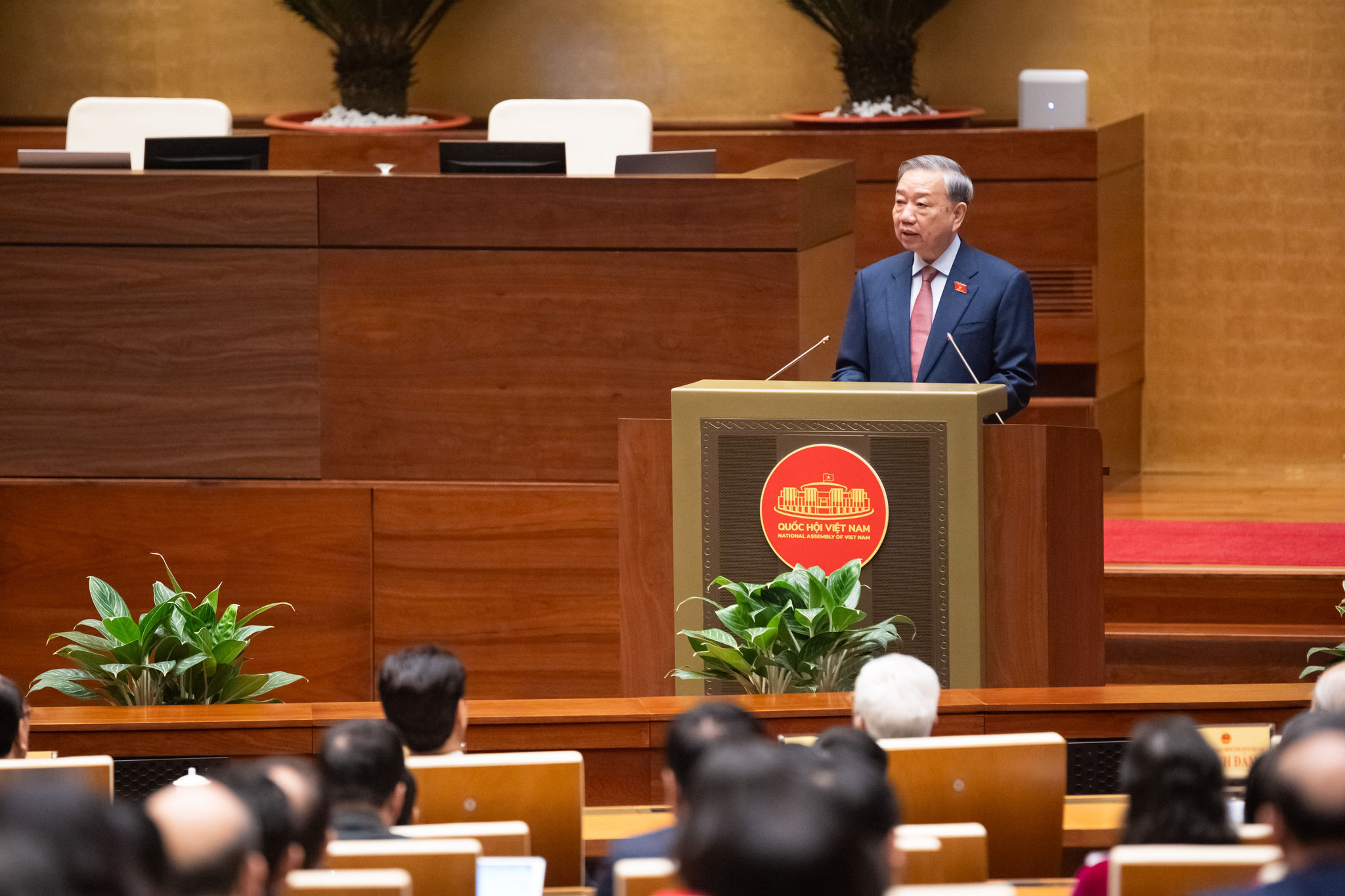
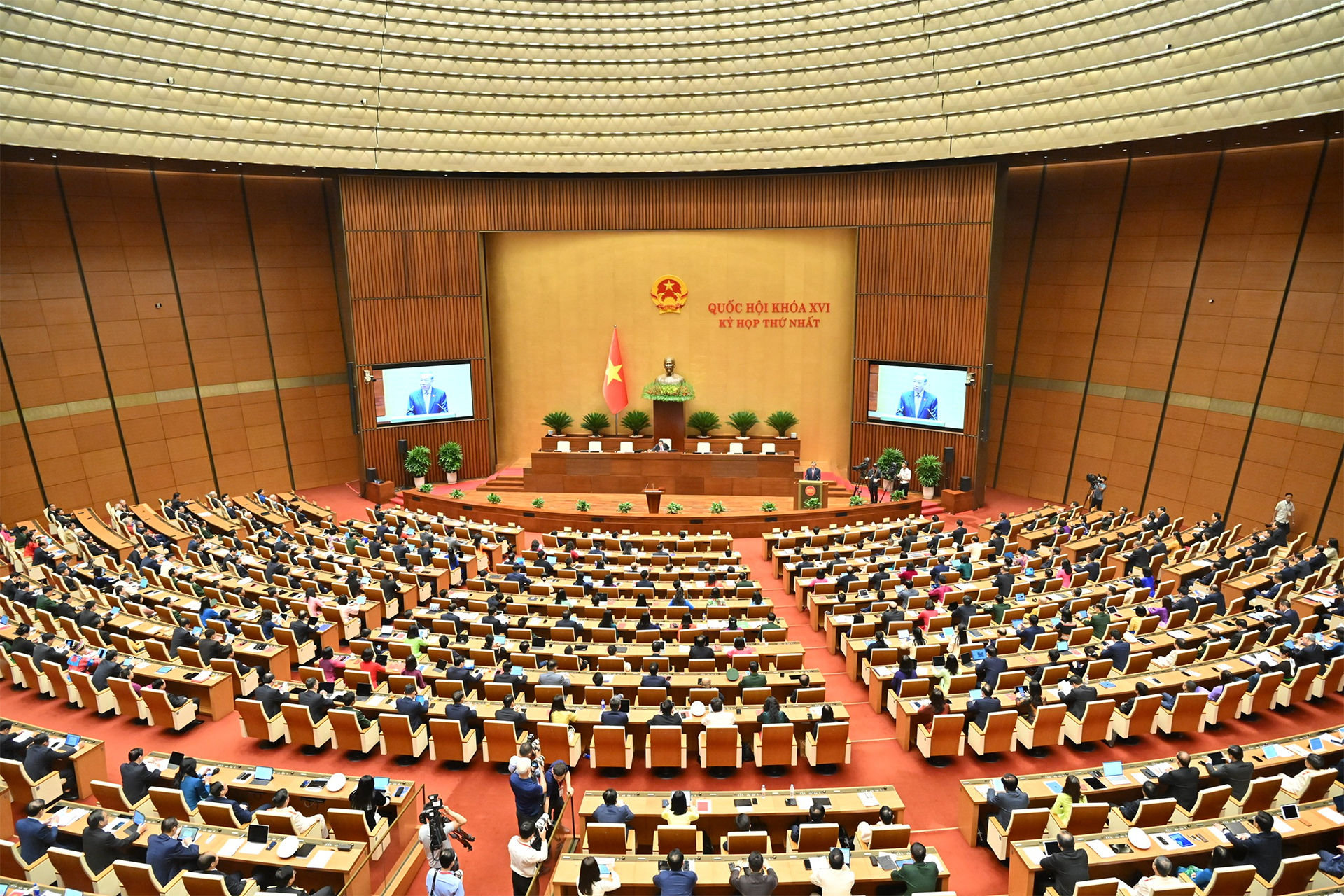
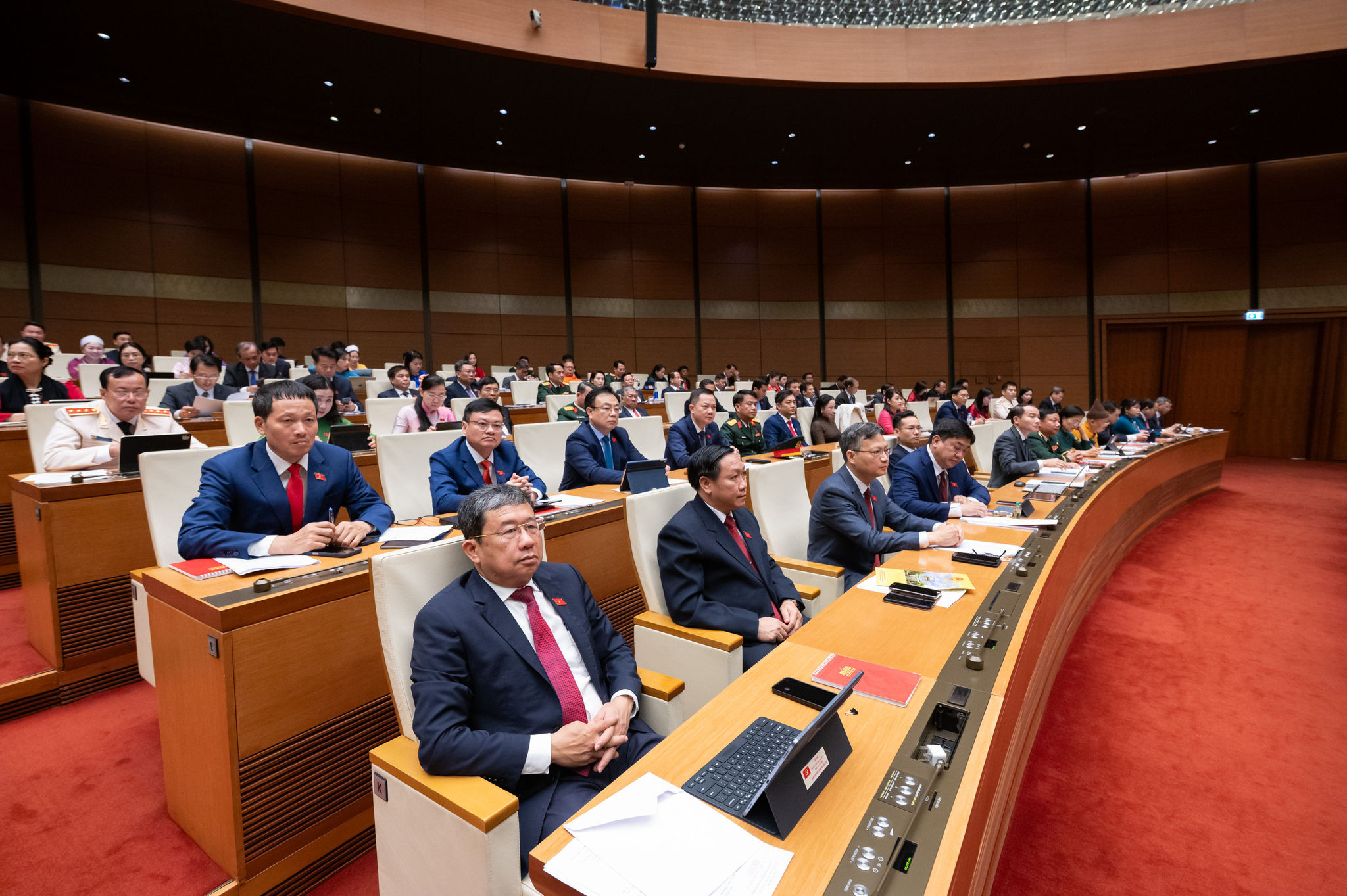
On the morning of April 6, the First Session of the 16th National Assembly opened solemnly at the Dien Hong Hall, the National Assembly House. General Secretary To Lam attended and delivered an important speech outlining strategic directions for the National Assembly's activities in the coming period. The People's Deputies Newspaper respectfully introduces the full text of General Secretary To Lam's speech.
Distinguished current and former leaders of the Party, State, National Assembly, Government, and the Vietnam Fatherland Front,
Honorable deputies of the 16th National Assembly,
Distinguished guests, members of the diplomatic corps, and international friends,
Fellow voters, compatriots throughout the country, and overseas Vietnamese communities,
Today, the 16th National Assembly of the Socialist Republic of Vietnam convenes its First Session—a session of special significance, marking the beginning of a new term for the highest representative body of the People and the highest organ of state power in our country.
This session will consolidate the state apparatus in accordance with the Constitution. It is also focused on institutionalizing the Resolution of the 14th National Party Congress, creating the legal, institutional, and policy foundations for the country to enter a new stage of development—rapid, sustainable, culturally distinctive development driven by science and technology, innovation, and the strong aspirations of the entire nation.
On behalf of the Party Central Committee, I warmly congratulate the nation on the successful election of deputies to the 16th National Assembly and People's Councils at all levels for the 2026–2031 term. I sincerely congratulate all National Assembly deputies and People's Council representatives who have earned the trust of voters nationwide. This is a great honor, but it is also a profound responsibility before the Party, the People, and the future of our country.
On this occasion, we respectfully acknowledge and highly appreciate the important contributions of the 15th National Assembly and People's Councils at all levels during the 2021–2026 term. Over the past term, these bodies have continuously renewed their organization and methods of operation, improved the quality of legislation and oversight, and made decisions on many critical national issues. They have helped remove institutional bottlenecks, support socio-economic recovery and development, strengthen national defense and security, and enhance Vietnam's international standing. These achievements, together with the glorious 80-year tradition of the Vietnamese National Assembly, provide a solid foundation for the 16th National Assembly to inherit, promote, and elevate to new heights.
Dear deputies, compatriots, and voters nationwide,
The world is undergoing profound and rapid changes. Strategic competition among major powers is intensifying. The international order and international law face growing challenges. Global supply chains, capital flows, technologies, and markets are being restructured. Traditional and non-traditional security challenges are increasingly intertwined, directly affecting every nation's development environment and opportunities.
At the same time, breakthroughs in artificial intelligence, big data, digital technology, and scientific advancement are fundamentally transforming production methods, growth models, governance systems, and social life. In this context, nations that proactively formulate strategies, reform institutions in a timely manner, unleash creativity, mobilize the strength of their people, and seize new opportunities will be the ones that advance and prosper.
With a civilization spanning 4,000 years, 96 years under the Party's leadership, and 40 years of renewal, our country has achieved great accomplishments of historic significance. Yet we must also face the reality that the new stage of development demands higher, faster, and more decisive reforms in institutions, growth models, governance quality, policy responsiveness, implementation discipline, and improvements in people's living standards.
The 14th National Party Congress clearly set development goals through 2030 with a vision toward 2045, while emphasizing the need for innovative development thinking, the mobilization of all resources, and the fullest possible promotion of national unity. In this process, the National Assembly must become more innovative, substantive, and effective in fulfilling its constitutional responsibilities.
I wish to emphasize that the National Assembly embodies the will, aspirations, and mastery of the People. It is the institution that decides major national issues and transforms Party policies into laws, public policies, and practical organizational strength. Every National Assembly deputy must deeply understand that they represent not only their electoral constituency and the trust of voters but also bear responsibility for the nation's destiny, the people's confidence, and the future of generations to come.
With that spirit, I propose that the 16th National Assembly focus on four major tasks.
First:
Fundamentally reform legislative work and build a modern, unified, stable, practical, and development-oriented legal system.
The National Assembly must further strengthen its ability to translate Party resolutions into policies and laws, creating a solid legal framework for successfully implementing socio-economic development objectives for 2026–2031 and beyond.
The legal system must truly become the institutional foundation of development, a tool for protecting human and citizens' rights, a driver of innovation, a means of liberating productive forces, and a pathway for opening new development spaces for the country.
Although Vietnam's legal system has improved significantly, overlapping regulations, inconsistencies, lack of coordination, and provisions that lag behind reality still exist. These shortcomings increase compliance costs, delay development opportunities, and create difficulties for citizens, businesses, and implementing agencies.
Therefore, the National Assembly should direct a comprehensive review of the legal system, improve the overall structure of national legislation, and decisively address overlapping and restrictive laws as well as the excessive delegation of responsibilities to subordinate regulations. Laws must be understandable for citizens, practical for businesses, and easy for state agencies to implement.
Most importantly, legislative thinking must shift fundamentally toward development-oriented lawmaking. Laws should not merely regulate existing realities; they must pave the way for new developments and help shape the future. Laws should not only "open roads" but also "repair roads."
For emerging issues, new sectors, new models, and new productive forces, appropriate approaches should be adopted, including bold but controlled pilot programs that create room for innovation and enhance national competitiveness.
The legislative process must be scientific, democratic, transparent, and receptive to the voices of experts, scientists, businesses, citizens, and international experience. Every law must serve national interests and the legitimate interests of the people. Group interests, local interests, and any negative influences that distort policy must be firmly prevented.
We must move from the mindset of "making laws for completeness" to "making laws for development," and from "good laws on paper" to "good laws in practice." The effectiveness of implementation and the satisfaction of citizens and businesses must be the highest measures of legislative quality.
Second:
Elevate the National Assembly's supreme oversight to become substantive, sharp, and result-oriented.
Oversight is one of the National Assembly's most important powers. However, oversight cannot stop at identifying shortcomings or pointing out weaknesses. It must become a tool for improving national governance, correcting mistakes, removing bottlenecks, providing early warnings of risks, and driving action.
In other words, oversight should not only examine what has been done but also help shape what needs to be done, identify emerging problems early, and ultimately answer a fundamental question: Has the problem actually been solved?
I propose that during this term, the National Assembly focus oversight on major issues, key sectors, and the most critical bottlenecks to development, as well as pressing concerns raised by voters and citizens. Particular attention should be given to the implementation of major Party policies, enforcement of laws, management of national resources and public assets, thrift practices, anti-waste measures, and the accountability of state agencies.
Every oversight activity must be linked to clear responsibilities, deadlines, deliverables, and measurable outcomes. Oversight should be based on data, evidence, quantitative indicators, and clear comparisons between objectives and actual results.
At the same time, the roles of National Assembly bodies, parliamentary delegations, and individual deputies in oversight activities must be strengthened. Coordination among parliamentary oversight, Party inspection and supervision, state auditing, inspection agencies, and other accountability mechanisms should also be enhanced to create a comprehensive force ensuring that the state apparatus acts correctly, swiftly, and effectively.
Third:
Enhance courage and vision in deciding important national issues; decisions must be accurate, timely, and serve the country's long-term interests.
As Vietnam enters a pivotal stage of development, the National Assembly must not only make correct decisions but also make timely and targeted ones. A delayed decision can mean missing a strategic opportunity.
Issues concerning socio-economic development, the state budget, public investment, national target programs, and major national projects involve the country's fundamental and long-term interests. They must be considered comprehensively, scientifically, and carefully—but delay must never become a bottleneck to development.
Given limited resources, the National Assembly must improve policy analysis, strategic forecasting, and impact assessment capabilities. It must identify the right priorities, breakthroughs, key projects, and strategic sectors in which resources should be concentrated, avoiding fragmentation and equal distribution without strategic focus.
Investment should not merely generate short-term growth; it must create new growth drivers, new competitive advantages, and new development opportunities for decades to come.
Every decision of the National Assembly must be considered within the broader framework of national development strategy, rapid international changes, and the requirements of independence, self-reliance, security, safety, and sustainable development.
The National Assembly makes decisions for the present but bears responsibility for the future. That is political courage, strategic vision, legislative wisdom, and the hallmark of the highest organ of state power.
Fourth:
Continue renewing the organization and operation of the National Assembly toward greater modernity, professionalism, closeness to the people, practical effectiveness, and faster policy responses.
In a constantly changing world, the National Assembly cannot operate at yesterday's pace or through outdated methods. It must adapt more quickly, respond to policy challenges more promptly, and make decisions faster while maintaining rigor and accuracy.
Consideration should be given to increasing the number of sessions where appropriate, diversifying and making more flexible the working methods of the National Assembly and its agencies, and especially promoting the use of digital technology, online platforms, and digital ecosystems to improve timeliness, proactivity, and effectiveness in policy deliberation and decision-making.
The quality and effectiveness of every National Assembly deputy—especially full-time deputies—must continue to improve. Parliamentary delegations must further strengthen their role as bridges connecting the National Assembly with voters and the people.
Every deputy should possess political courage, professional expertise, critical thinking skills, and the ability to faithfully convey the voices of the people to the parliamentary chamber.
The National Assembly must strengthen its bond with the people, expand channels for receiving and listening to opinions from voters, citizens, businesses, intellectuals, and scientists, and enhance transparency throughout all of its activities.
We must build a modern, intelligent digital parliament. But first and foremost, it must be a parliament that is close to the people, understands the people, serves the people, and acts in their interests.
When the people's voices are heard, when public opinion is truthfully reflected, and when policies arise from real-life needs, the National Assembly will become stronger, the State more resilient, and social trust greater.
Dear National Assembly, voters, and compatriots nationwide,
The term of the 16th National Assembly begins with tremendous responsibilities. I trust and expect that every deputy will continuously strengthen political courage, improve competence and responsibility, remain close to the people, understand the people, listen to the people, faithfully reflect their aspirations, and place national interests above all else in every decision. These are the essential qualities of a people's representative in the new era.
Standing before a historic opportunity for our nation, we have every reason for confidence: with the glorious 80-year tradition of the Vietnamese National Assembly; with the wise and steadfast leadership of the Party; with the support and unity of the people; with close coordination from the Government and the entire political system; and with the democratic spirit, creativity, enthusiasm, and responsibility of all deputies, the 16th National Assembly will successfully fulfill the responsibilities entrusted to it by the Party, the State, and the People.
Together, we will contribute to realizing the aspiration of building a peaceful, independent, democratic, prosperous, civilized, and happy Vietnam, steadfastly advancing toward socialism.
Once again, I wish all current and former Party and State leaders, representatives of the Vietnam Fatherland Front, National Assembly deputies, distinguished guests, compatriots, and comrades good health, happiness, and success.
I wish the First Session of the 16th National Assembly every success.
Thank you very much.
*Headline assigned by People's Deputies Newspaper.