

Expanding the pool of lawyers goes hand in hand with standardizing genuine professional competence
Commenting on the draft Law on Lawyers (amended), National Assembly Deputy Cao Manh Linh (Thanh Hoa) said that expanding the source of high-quality lawyer training to serve international integration is necessary, but he also noted that expanding the source of lawyers must be accompanied by mechanisms to ensure that they are equipped with fundamental knowledge and practical professional skills.
Attracting highly specialized, interdisciplinary personnel
Referring to the expansion of high-quality lawyer training to serve international integration, in relation to Articles 7 and 10 of the draft Law, National Assembly Deputy Cao Manh Linh emphasized that expanding the pool of lawyers must be accompanied by mechanisms to ensure they are equipped with fundamental knowledge and practical professional skills.

Citing the report summarizing the implementation of the Law, the delegate stated that by the end of 2025, the whole country will have 22,098 lawyers, more than five times the number in 2007. However, the development of a team of lawyers proficient in foreign languages and with in-depth knowledge of international trade has not met expectations; their participation in advising and evaluating the legal aspects of large government projects remains limited.
According to the delegates, the need for this workforce becomes even more urgent when implementing Resolution No. 222 on the International Financial Center and Law No. 150 of Specialized Courts in 2025. Furthermore, point b, clause 5, Article 24 of the draft requires that legal advice provided by foreign law firms in Vietnam must be given and signed by Vietnamese lawyers. This regulation further highlights the necessity of preparing a team of Vietnamese lawyers who are both proficient in law and knowledgeable in international finance, trade, and technology to handle work in an integrated environment.
Based on feedback from the working group, Clause 2 of Article 7 of the draft has narrowed the exceptions, applying only to individuals with postgraduate law degrees from countries that do not offer bachelor's degree programs in law. For Vietnam, the draft still stipulates that a bachelor's degree in law is a mandatory requirement.
Agreeing with the need to ensure a sound legal framework, delegate Cao Manh Linh argued that this approach has not yet addressed the need to attract highly skilled professionals in finance, international trade, and technology to the legal profession. The distinction based on domestic or foreign qualifications is also inappropriate and does not guarantee a realistic assessment of the abilities and knowledge of those wishing to change careers.
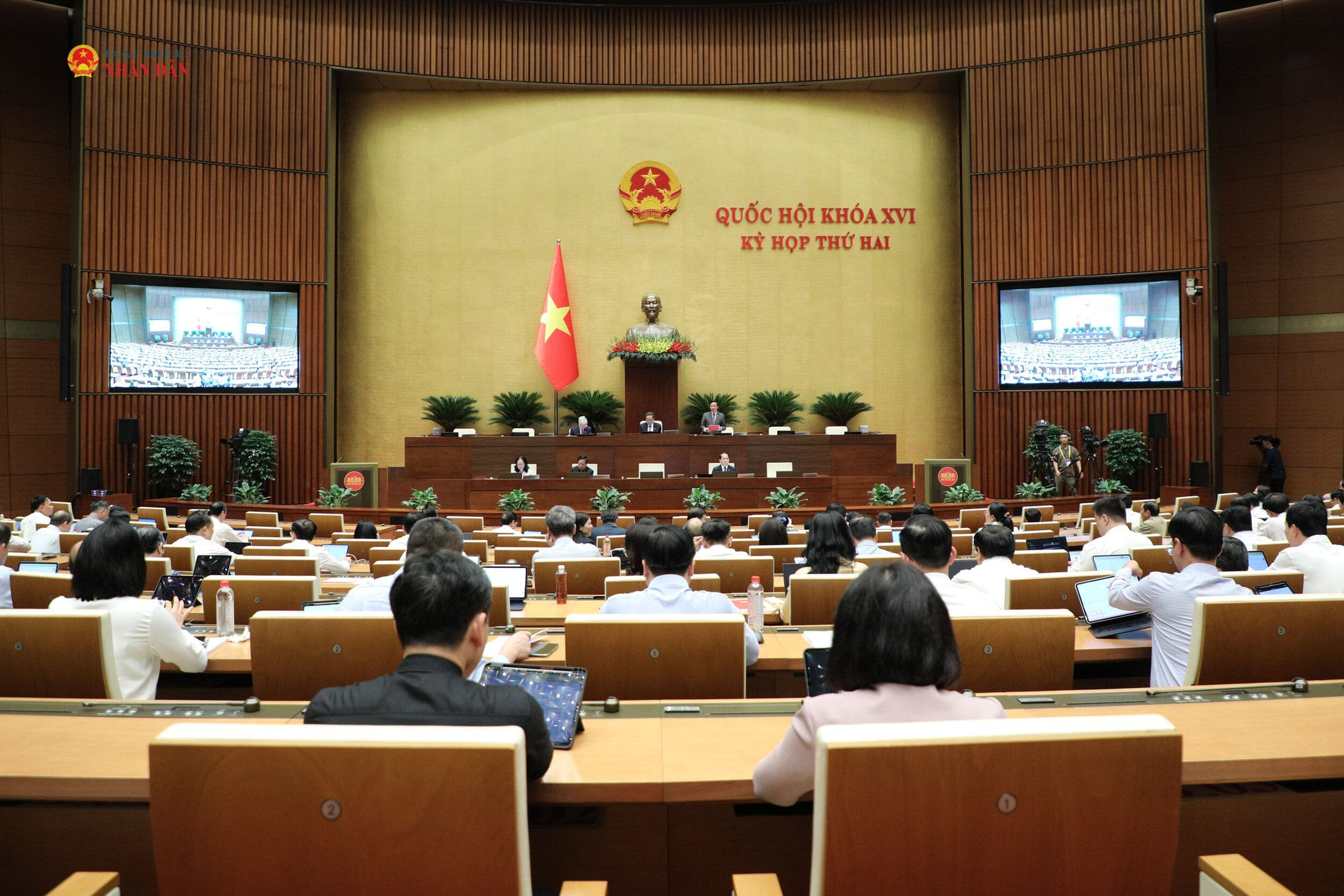
According to the draft regulations, individuals who already hold a university degree in another field, including those with a master's or doctoral degree in law from domestic institutions, must still obtain a bachelor's degree in law if they wish to practice law. Meanwhile, pursuing a second bachelor's degree in law through some current programs takes between 2.5 and 3 years.
The delegate raised the question: "Instead of requiring students to complete an additional degree, we should consider the possibility of requiring them to supplement any missing legal knowledge according to a standardized program, ensuring reasonable time and cost."
Responding to the opinion within the group that there is no shortage of law graduates and therefore caution is needed when expanding the target group, the delegates argued that an abundant supply of law graduates does not necessarily mean that the demand for lawyers with in-depth, interdisciplinary expertise and the ability to meet the requirements of international integration is sufficient. Therefore, opening up a reasonable and substantive transition pathway for those with good expertise in finance, international trade, and technology is a necessary way to supplement the human resources.
Standardize knowledge standards and assess professional competence realistically
Agreeing with the concerns of the reviewing agency, National Assembly Deputy Cao Manh Linh emphasized that expanding the target group must be linked to a unified standard of fundamental legal knowledge before entering vocational training. Based on that, it is necessary to assess and recognize the knowledge that university graduates from other fields have already achieved, while requiring them to study and take supplementary tests to fill in any gaps.
Citing the experience of England and Wales, the delegate stated that graduates from other fields can still enter the legal profession. In the litigation branch, a foundational conversion course typically lasts at least one year full-time before further professional training. In the advisory and representation branch, students must pass knowledge and skills exams, have two years of legal work experience meeting the requirements, and be qualified to practice.

Based on this experience, delegates argued that while multiple pathways to becoming a lawyer are possible, they must be accompanied by corresponding quality assurance mechanisms.Based on that, the delegates proposed revising the draft Law in three areas.
Firstly , amend and supplement Clause 2 of Article 7, stipulating that individuals with a university degree in another field, or a diploma recognized under Vietnamese law, may become lawyers if they complete a standardized legal knowledge conversion program. This group must meet the standards of character, graduate from a lawyer training course, complete 12 months of apprenticeship, and pass the national bar examination.
Secondly , Clause 4 of Article 7 is amended to include the provision that the Government shall provide detailed regulations on the standards for conversion programs and the mechanism for evaluating and recognizing equivalent knowledge. For individuals with a university degree in another field, including those with a master's or doctoral degree in law, an assessment of the knowledge already acquired is required, and additional courses and tests covering any deficiencies must be taken before entering vocational training.
Thirdly, ensure that the national bar exam truly assesses professional competence. The delegate pointed out that Clause 3, Article 10 of the draft requires an assessment of legal knowledge, professional ethics and conduct, and lawyer's professional skills. Report No. 920, page 21, is expected to clarify the assessment content in the guiding documents. The specifics need to ensure that the assessment evaluates the ability to apply the law and handle practical work.
Regarding the proposed two-part multiple-choice test in the draft circular attached to the application, the representative requested clarification on the method of assessing professional skills to fully meet the requirements of the Law.
Representative Cao Manh Linh emphasized that the goal of the proposals is to open up more sources of highly skilled human resources to meet the requirements of international integration; to reduce time and costs while still ensuring the necessary legal foundation and professional competence according to unified requirements, not just relying on diplomas and certificates.