

Establish mechanisms for the protection and value extraction of artificial intelligence-related intellectual assets
During discussions on the draft Law amending and supplementing a number of articles of the Law on Intellectual Property, National Assembly deputies proposed further improving regulations on the protection of inventions and intellectual property rights for products created with the support of artificial intelligence, while also removing obstacles in the commercialization of these assets.
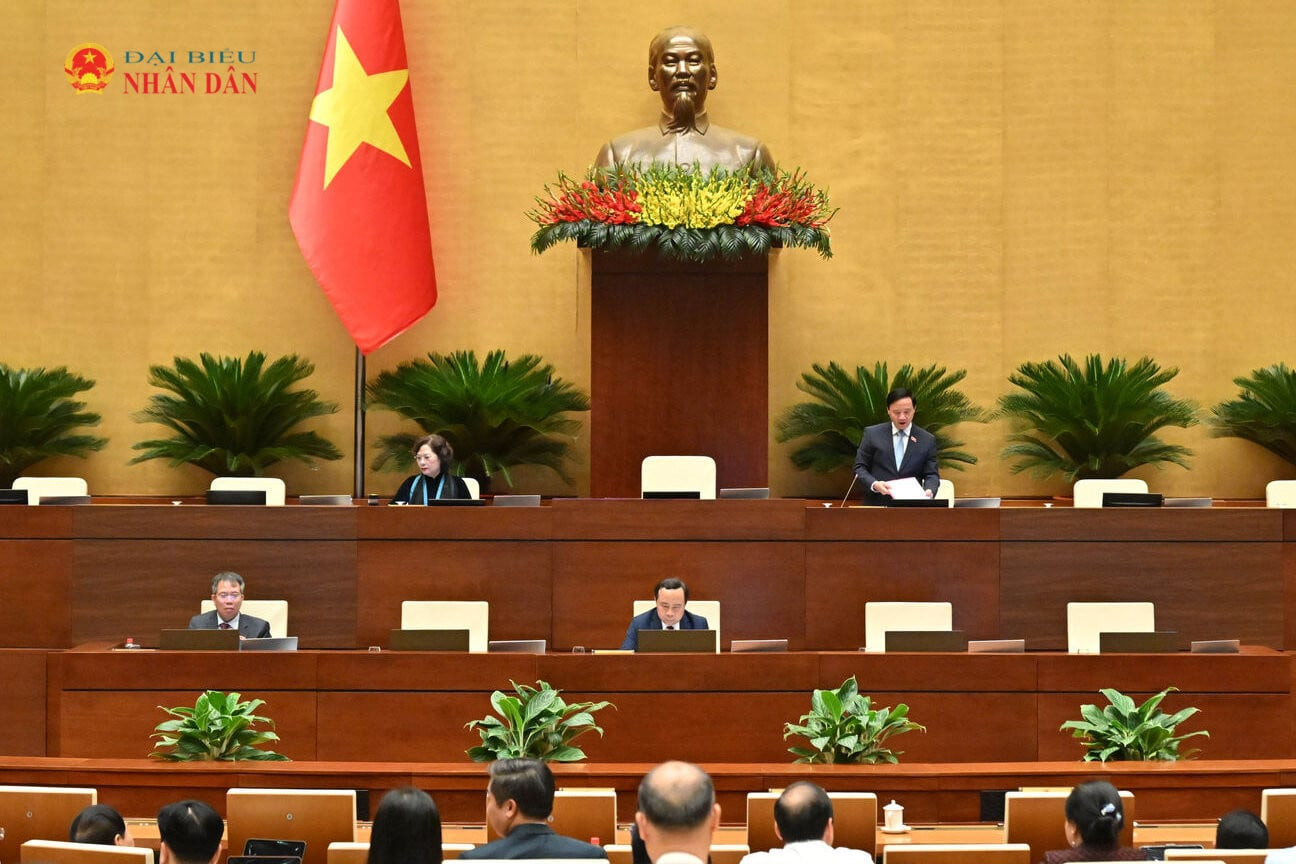
On the morning of November 3rd, under the chairmanship of Deputy Speaker of the National Assembly Nguyen Khac Dinh, the National Assembly discussed in the plenary session the draft Law amending and supplementing a number of articles of the Law on Intellectual Property.
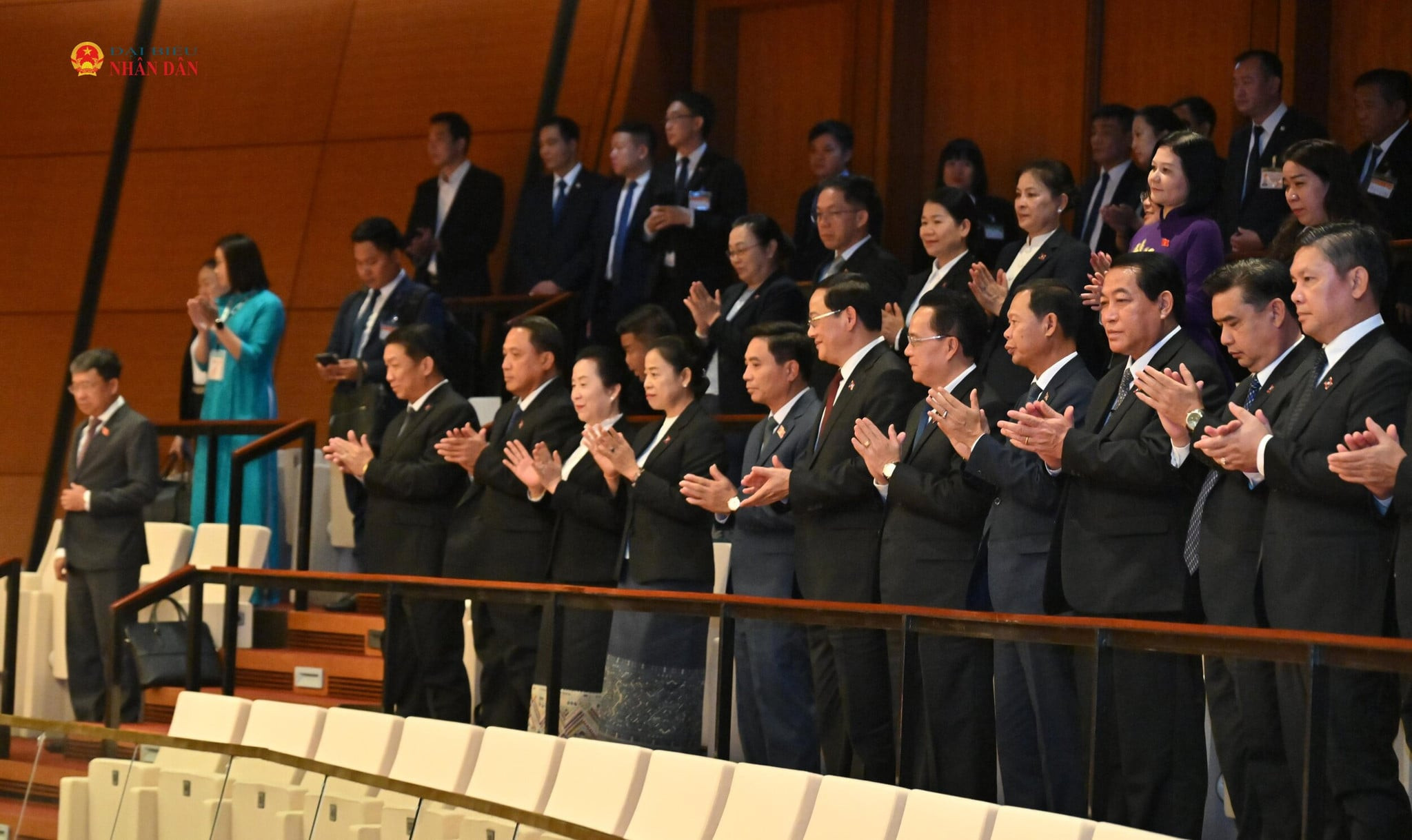
During his official visit to Vietnam, Lao National Assembly President Sonexay Siphandone and the high-level delegation of the Lao National Assembly attended a plenary session of the National Assembly.
Vice Chairman of the National Assembly Nguyen Khac Dinh warmly welcomed and wished the visit of the Chairman of the Lao National Assembly and the high-level Lao delegation great success; wishing that the great friendship, special solidarity, comprehensive cooperation and strategic linkage between Vietnam and Laos, and the relationship between the two National Assemblies will forever flourish and endure for generations to come.
The streamlining of procedures must be substantive and ensure the rights of all parties.
Agreeing with the necessity of amending and supplementing some articles of the Intellectual Property Law to remove obstacles, simplify procedures and improve the efficiency of state management, National Assembly Deputy Vu Minh Dao ( Lai Chau ) also emphasized that reducing procedures must go hand in hand with reducing the time and cost of implementation.
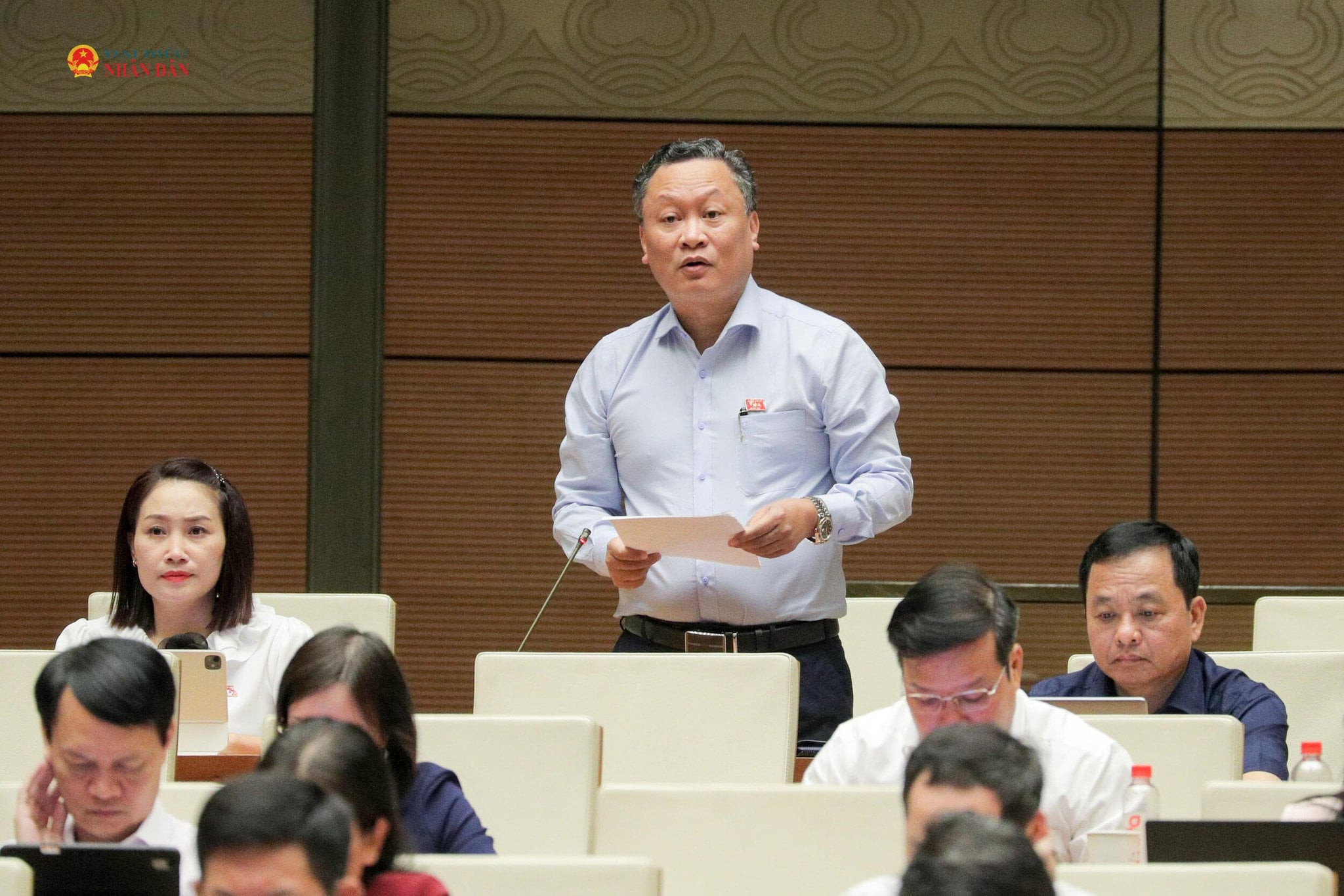
n this spirit, delegates proposed clarifying the practical benefits of each of the 18 administrative procedures and 5 business investment conditions that have been reduced in the draft Law.
Specifically, regarding the change in registration procedures for transfer contracts to the procedure for amending protection certificates as stipulated in Article 97, it is necessary to determine exactly which documents can be reduced, how long the process will take, and what the costs will be.
At the same time, the draft Law should stipulate the principle of not requiring the re-submission of information already available in the database that the processing agency can access; and publicly disclose the processing time, progress, and responsibilities for handling applications.
Article 175 needs to be revised to include only checking the completeness of the documents, avoiding wording that could lead to the imposition of additional conditions right from the application stage.
Regarding the quality assurance and independence of intellectual property expert assessment, delegates noted that Article 201 of the draft Law regulates both copyright and related rights assessments, directly impacting creators and cultural businesses. Therefore, it is necessary to clearly define the principles of objectivity, honesty, and accountability for expert assessment conclusions.
According to the delegates, when transitioning to a notification mechanism, the draft Law needs to specify measures to ensure quality. This includes adding principles for controlling conflicts of interest and the obligation to refuse expert assessment when independence and objectivity cannot be guaranteed, especially when the expert is representing a party in the case itself.
"The expert assessment conclusion must clearly state the basis, methods, and data used, have a mechanism for verification and re-assessment, and specify the responsibility for compensation as stipulated when an incorrect conclusion causes damage. The scope of the government's detailed regulations needs to be clearly defined to avoid re-establishing business conditions in other forms," the representative emphasized.
Another issue of concern to delegate Vu Minh Dao is the rights and obligations of the parties during the period awaiting the registration of the transfer. Article 138 of the draft Law distinguishes between the time the contract becomes effective between the parties and the time the transfer is registered by the state agency, but the legal consequences during this period need to be clarified.
The delegate raised the question: When the transferee has made the payment but the transfer has not been recorded, who has the right to request action against the violation? How is a situation resolved if a right is transferred to multiple people or if the request for recording is refused?
Therefore, delegates proposed immediately adding principles for handling these situations to the draft law; and at the same time, specifying the time limit for recording and the responsibility for updating the legal status of diplomas, ensuring the security of transactions.
From a healthcare perspective, National Assembly Deputy Nguyen Lan Hieu (Hanoi) addressed the issue of prolonging patent protection for drugs by changing the salt form, dosage form, or dosage to apply for new patents, thereby hindering generic drugs – which are cheaper and provide more access to treatment for patients.
The delegate stated that the term of patent protection for pharmaceuticals worldwide is typically 20 years. However, altering certain characteristics of a drug to obtain a new patent could be a way to prolong exclusivity. Therefore, the delegate proposed that the draft law clearly stipulate that a new discovery regarding the form of existence or a new use of a drug should not be considered innovative if it does not significantly increase the therapeutic effect.
At the same time, Vietnamese businesses should be allowed to research, test, and file applications for generic drugs while the original patent is still valid, so that the drugs can be brought to market immediately after the protection expires. Otherwise, access to these drugs could be delayed by another 2-3 years.
Clarifying intellectual property rights for products using AI.
One issue that received attention from National Assembly deputies was intellectual property rights for products using artificial intelligence (AI).
Clause 5 of Article 6 of the Intellectual Property Law stipulates the legal basis for the creation and establishment of intellectual property rights for objects created using artificial intelligence and assigns the Government to provide detailed regulations. However, National Assembly Deputy Nguyen Trung Kien (Dong Nai City) argued that, given the rapid development of AI, the basic principles need to be clarified further in this amendment and supplement to ensure transparency, consistency, and stability.
The delegates proposed further research and refinement of Clause 5, Article 6, to clearly define that artificial intelligence platforms are not subjects of intellectual property rights; products created by AI users are protected in proportion to the level of creative contribution of that individual.
In addition, it is necessary to refine the regulations on intellectual property rights limitations in Article 7, clarifying the conditions for using protected works and data to develop and operate AI platforms, ensuring a balance between the rights of creators and the needs of research and development of technology.
Delegates noted that it is necessary to distinguish between the legitimate use of data for AI research, development, and training and the unauthorized copying and commercial exploitation of protected works. AI should not be allowed to become a tool to legitimize copyright infringement.
Besides the issue of protection, delegate Nguyen Trung Kien also emphasized the need to exploit the economic value of intellectual property, making this resource truly contribute to economic development. The provisions of the Intellectual Property Law need to ensure consistency with related laws, including the draft Law on Auctions regarding the possibility of auctioning and contributing capital using intellectual property rights.
In reality, many businesses, research institutes, and universities possess valuable inventions, useful solutions, software, technologies, and intellectual property, but their commercialization potential remains limited.
According to the delegates, Article 138, which regulates the transfer of industrial property rights, and Article 141, which regulates the transfer of the right to use industrial property objects, are important legal bases for exploiting intellectual property assets. However, it is necessary to further improve the commercialization mechanism, especially regarding valuation, capital contribution, the use of intellectual property rights as collateral, and the transfer of research results.
Delegates proposed adding regulations to promote the commercialization of intellectual property assets within the group of regulations on rights transfer, in the direction that the State encourages organizations and individuals to determine the value, contribute capital, transfer, and legally grant the right to use and exploit intellectual property assets commercially.
At the same time, it is necessary to promote the development of the intellectual property rights trading market, databases for valuation, and services supporting the commercialization of intellectual property assets. Mechanisms should be in place to encourage businesses, research institutes, and universities to integrate research results and inventions into production and business; ensuring a fair distribution of benefits between the investing organization, the lead unit, and the direct creator.
Regarding the healthcare sector, delegate Nguyen Lan Hieu stated that AI is significantly assisting doctors in reading and diagnosing images, prescribing medication, and detecting medical errors. However, the delegate suggested maintaining the principle that AI is not the author; diagnostic results assisted by AI must be the responsibility of the human clinical officer. Furthermore, it should be clearly stipulated that products created by AI are not protected by patents unless there is creative human intervention.