

Control progress and improve investment efficiency in power projects
National Assembly deputies proposed developing a realistic electricity generation pricing framework and improving power purchase agreements to enhance investment efficiency and attract resources for energy development.
The electricity generation price framework must accurately reflect actual investment costs
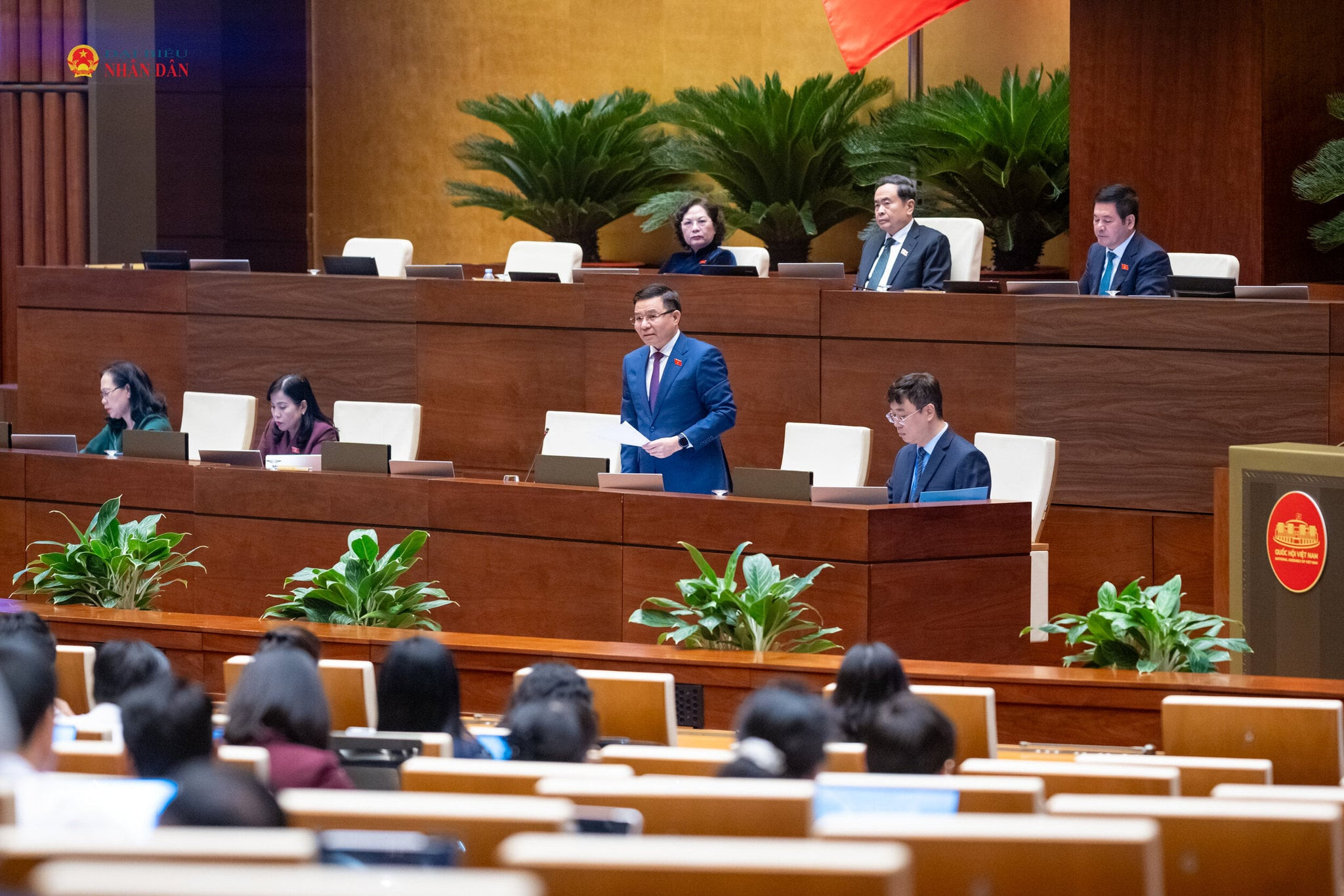
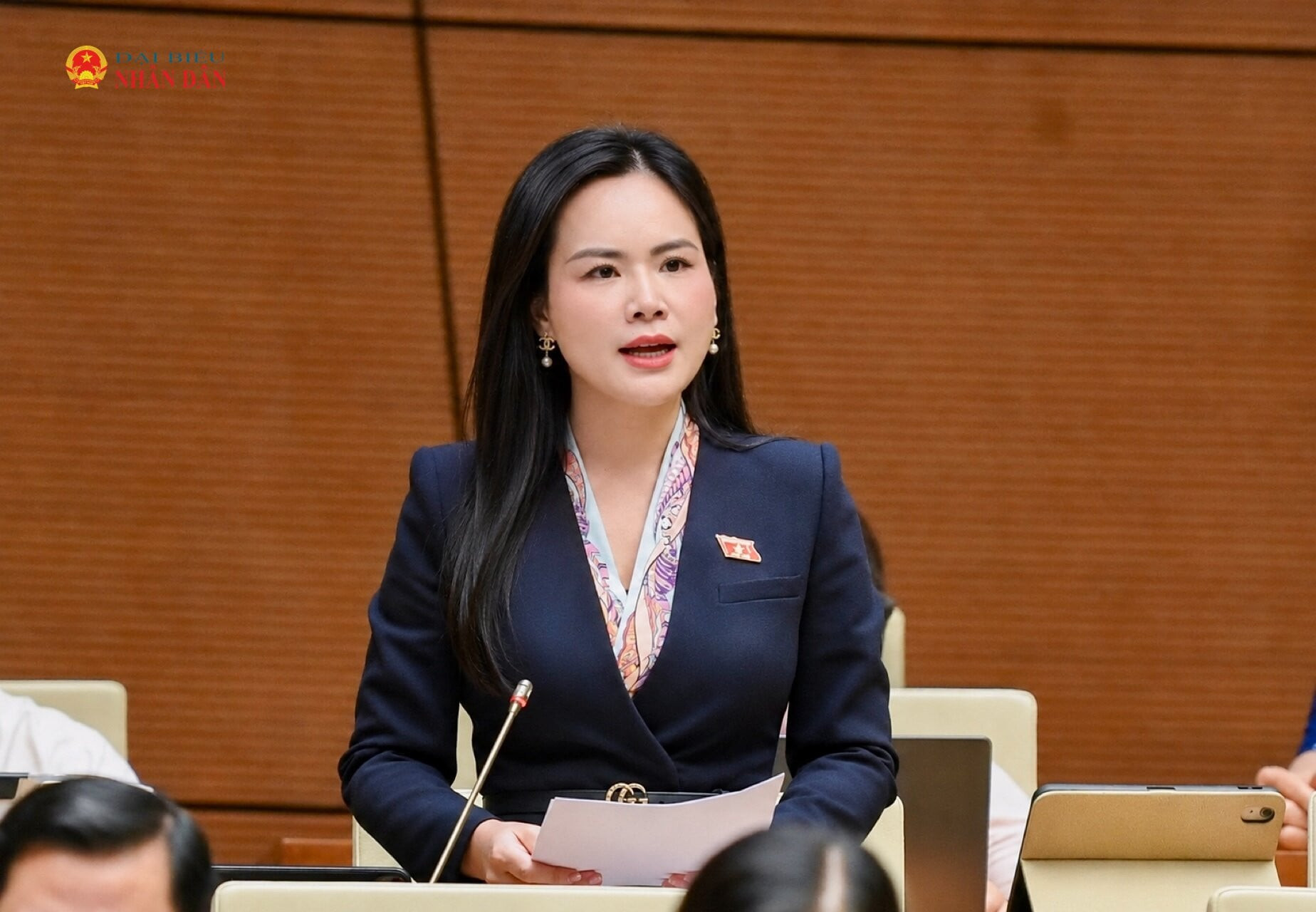
During the discussion of the draft Law amending and supplementing a number of articles of the Electricity Law, National Assembly Deputy Nguyen Thi Thanh Binh ( Hung Yen ) addressed the mechanism for establishing a framework for electricity generation prices. According to the deputy, the price framework needs to be developed promptly and objectively, fully reflecting reasonable and legitimate costs, and attractive enough to investors.
Citing the practical experience of developing the 2026 pricing framework, the representative stated that EVN used parameters from a sample project with a feasibility study report approved in 2023, before the new Land Law was enacted. Meanwhile, new compensation and support policies have significantly increased the costs of land clearance, support for restricted land use in wind turbine corridors, and the total investment of the project.
If outdated data continues to be used, the electricity generation price framework will not accurately reflect current investment conditions. Therefore, the representative proposed adding to Clause 3, Article 51 the principle of updating data according to the year of application, technology, and geographical area; accurately and fully calculating reasonable and legitimate costs, especially those related to land.
The delegates also suggested that the pricing framework should be developed by a competent unit, independent of the commercial interests of the electricity buyers; EVN should provide the data, and the Ministry of Industry and Trade should organize the assessment and approval. The annual electricity generation pricing framework should be announced no later than the first quarter, and there should be a transitional mechanism in place in case a new framework is not yet issued.
Finalizing power purchase agreements builds investor confidence.
Regarding the need to mobilize international capital, delegate Nguyen Thi Thanh Binh suggested that it is necessary to further improve the laws on electricity and power purchase agreements (PPAs) to meet the basic requirements of international financial activities.
According to delegates, the target power generation capacity by 2030 is approximately 183,000-236,000 MW; the capital requirement for power sources in the 2026-2035 period alone needs to exceed 100 billion USD. The scale of investment is very large, requiring the mobilization of diverse resources and attracting international investors with advanced technology and management experience. However, one of the key bottlenecks currently is that power purchase agreements do not meet the requirements for arranging international financing.
The delegates cited a report from the Ministry of Industry and Trade at the meeting on October 1, 2026, according to which, out of 18 LNG projects on the watchlist, only one project was assessed as capable of meeting the schedule. Offshore wind power projects may also encounter similar obstacles after the investor selection process.
To address this, delegates proposed adding a mechanism for the reasonable allocation of exchange rate risk to Article 51. Since project revenue is paid in Vietnamese Dong while debt repayment obligations are in foreign currency, this could create significant risk for investors. Therefore, it is necessary to allow the price component corresponding to reasonable foreign currency obligations to be adjusted according to the reference exchange rate, payable in Vietnamese Dong; and to entrust the Government with the task of specifying regulations, ensuring consistency with foreign exchange laws.
In addition, it is necessary to regulate a mechanism for long-term electricity purchase commitments for large-scale power sources, tailored to the characteristics of each source type and the needs of the system. For LNG power plants, it is necessary to clarify the minimum contract output, the application period, and allow for payment based on capacity availability to offset reasonable fixed costs.
For other large power sources, it is necessary to clarify the commitment to purchase eligible output for delivery and the risk allocation mechanism in case of power cuts not caused by the investor's fault. Regulations should also clearly define the responsibilities of the power buyer, the conditions, limits, and payment methods, avoiding duplication between mechanisms.
Emphasizing the need to finalize the draft Law, delegate Nguyen Thi Thanh Binh stated that the benchmark for this revision of the Electricity Law must be the ability to actually integrate power sources into the system. Regulations need to clearly define responsibilities, ensure timely pricing, and be feasible in terms of capital mobilization, thereby making electricity planning objectives a driving force for economic growth.