

Clear, stable mechanisms needed to tap OV resources: Vietnamese-Canadian entrepreneur
OVs offer more than capital; they also bring knowledge, technology, management experience, and international market access. Vietnam needs to advance high technology, digital transformation, artificial intelligence, green economy, environmental protection, education and training.
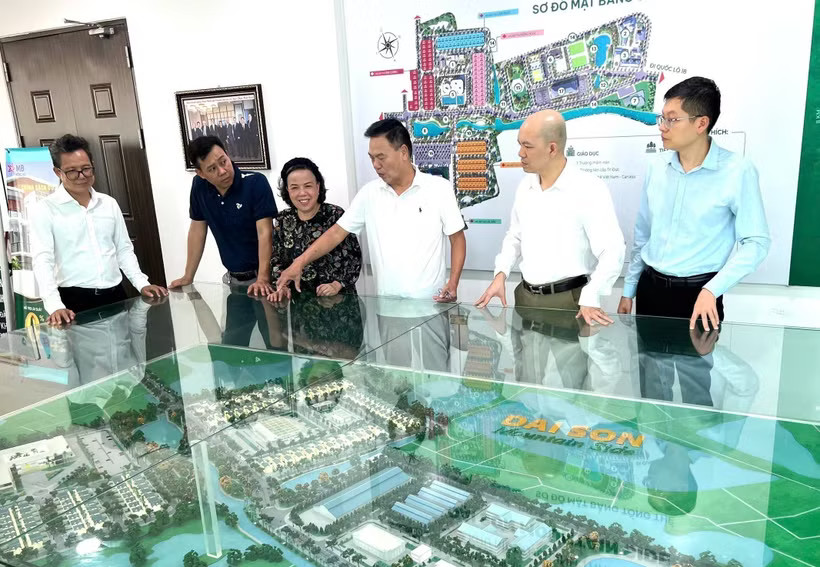
Ottawa (VNA) – The Politburo’s Resolution 23-NQ/TW should soon be translated into clear, stable, and more favourable mechanisms to bolster overseas Vietnamese (OV) confidence in investing at home, said Vietnamese-Canadian entrepreneur Nguyen Hoai Bac.
Bac, who is Vice President of the Vietnam-Canada Business Association and chairman of Dai Son Group, said after 40 years in Canada and 25 years investing directly in Vietnam, he sees enormous untapped potential for the OV community to contribute to the homeland.
He noted that OVs offer more than capital; they also bring knowledge, technology, management experience, and international market access. Vietnam needs to advance high technology, digital transformation, artificial intelligence, green economy, environmental protection, education and training.
Many Vietnamese work in developed economies with access to advanced technologies, management models and business practices. That expertise remains underused partly because policy and investment bottlenecks prevent entrepreneurs from committing to long-term projects, Bac said.
Against that backdrop, Resolution 23-NQ/TW reaffirms that the OV community is an integral part of the great national unity bloc, while providing a basis for greater contributions to national development.
According to him, the approach is shifting from mobilising OV to treating them as development partners who directly contribute resources, experience and initiatives.
Bac said a major obstacle is inconsistent policy enforcement, with overlapping regulations and unstable tax, fee and charge policies that can disrupt medium- and long-term investment plans.
A gap between central policy and local enforcement is particularly concerning. Favourable rules mean little if procedures remain slow. For investors, time is a resource, and delays raise costs, hurt project efficiency and can push capital to more favourable markets.
The resolution therefore needs clear, consistent guidance from central to local levels, with defined procedures, responsibilities and processing deadlines so entrepreneurs can plan proactively.
He suggested going beyond investment procedures by fine-tuning rules for legitimate capital flows between Vietnam and countries with large Vietnamese communities, like Canada. While sending money from Canada to Vietnam for investments is fairly straightforward, some transactions in the opposite direction still involve several steps. He also noted that immigration policies for overseas Vietnamese entrepreneurs should be updated to support long-term projects, as a stable visa system would ease administrative burdens for investors managing ventures in Vietnam.
On importing new technology and hi-tech equipment, he said procedures for import, inspection and commissioning should be clearer, more transparent and faster, as prolonged warehousing and port storage raise costs and delay projects.
Clearing these barriers will unlock resources from more than 6.5 million Vietnamese in 130 countries and territories, with entrepreneurs, experts and intellectuals serving as bridges that bring capital, knowledge and technology, connecting domestic firms to global partners, markets and management models.
For Vietnam-Canada ties, that role is especially meaningful, given remaining room for cooperation in trade, investment, technology and innovation. A transparent, stable and favourable investment environment would turn OV resources into concrete projects that contribute to national development, he added./.