

Chinese expert highlights Vietnamese leader’s presence in 33rd APEC Economic Leaders’ Week
General Secretary and President To Lam’s participation in the APEC meeting hosted by China is expected to provide fresh impetus for high-level strategic exchanges between the two Parties and countries, while reinforcing bilateral channels and creating synergies through multilateral cooperation.
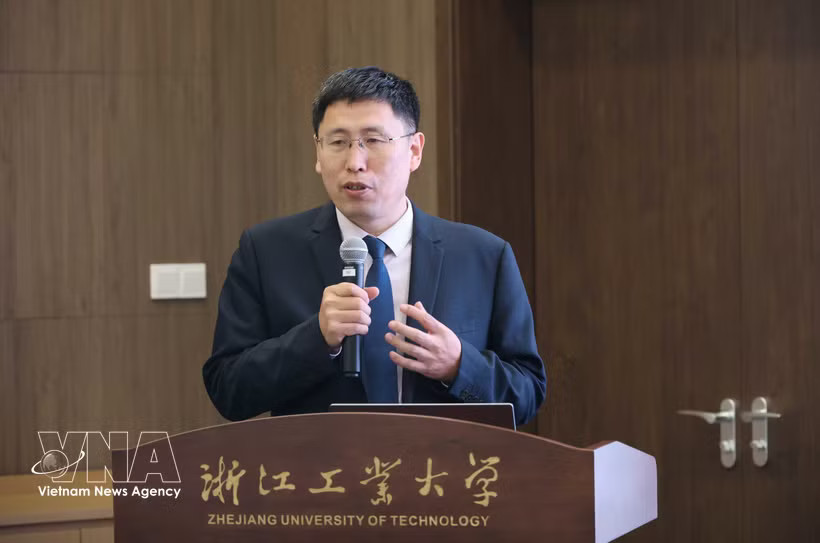
Beijing (VNA) – Professor Zhao Weihua, Director of the Centre for China’s Relations with its Neighbouring Countries at Fudan University, has highlighted the diplomatic significance of General Secretary of the Communist Party of Vietnam Central Committee and President To Lam’s attendance at the 33rd APEC Economic Leaders’ Week in Shenzhen and his bilateral engagements in China.
In an interview granted to Vietnam News Agency correspondents in China ahead of the trip, Zhao said the visit represents an important continuation of the political consensus reached during the General Secretary and President’s state visit to China in April.
During that visit, the two countries issued a joint statement stressing the need to advance the building of a Vietnam–China community with a shared future that carries strategic significance at a higher level in the new era. Railway cooperation was also identified as a new highlight in the bilateral strategic ties. The Chinese scholar noted that the Vietnamese leader’s return to China just over six months later represents the practical implementation of those agreements. It also reflects Vietnam’s consistent policy of regarding relations with China as a top priority in its foreign policy.
Regarding political trust, Zhao described the first ministerial-level meeting under the 3+3 strategic dialogue mechanism, covering foreign affairs, defence and public security, as a major milestone in bilateral relations in 2026.
As the world's first ministerial-level dialogue mechanism to bring together these three areas, the framework goes beyond regular information exchanges to focus on security issues related to the two countries’ political systems and on strategic coordination enhancement.
Against this backdrop, General Secretary and President Lam’s participation in the APEC meeting hosted by China is expected to provide fresh impetus for high-level strategic exchanges between the two Parties and countries, while reinforcing bilateral channels and creating synergies through multilateral cooperation.
On economic cooperation prospects, the professor said that the greatest potential lies in enhancing both physical infrastructure connectivity and institutional linkages, rather than simply increasing trade volumes.
He pointed to the initiative launched earlier this month to accelerate exchanges and cooperation among localities in the Red River basin of Vietnam and China, which sets out clear priorities, including smart border gates, cross-border e-commerce, multimodal transport, clean energy and green development.
Cooperation is therefore expanding beyond traditional trade in goods to encompass smart ports, harmonisation of logistics standards and cross-border industrial supply chain connectivity.
He added that railway cooperation could generate wider regional benefits if effectively integrated into Vietnam’s northern and southern transport infrastructure plans, helping shape connectivity across the Indochinese region.
Zhao also noted that Vietnam’s Law on Artificial Intelligence, which took effect in March 2026, provides a legal foundation for digital economic cooperation. Regulatory coordination in AI governance and the digital transformation of small- and medium-sized enterprises could offer a promising direction for the next phase of bilateral investment./.