

Autumn Economic Forum 2026 seeks to establish new growth poles
Vietnam has built an impressive growth model, becoming a major manufacturing hub, an investment destination and an increasingly interconnected economy. It now needs to move beyond simply building connections and become a smartly connected economy.
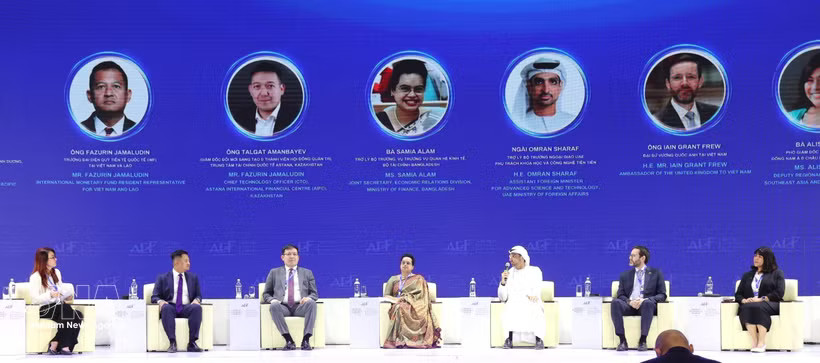
An in-depth assessment of capabilities, identification of barriers and solutions to overcome them, and stronger connections and cooperation to help Vietnam and Ho Chi Minh City seize new growth drivers in a changing world were the focus of a discussion on cooperation frameworks for a new era held on October 28 as part of the Autumn Economic Forum (AEF) 2026 in Ho Chi Minh City.
Challenges and prospects for Vietnam
Devendra Jain, Senior Manager for Advanced Manufacturing and Supply Chains at the World Economic Forum (WEF), said Vietnam has built an impressive growth model, becoming a major manufacturing hub, an investment destination and an increasingly interconnected economy. The country now needs to move beyond simply building connections and become a smartly connected economy.
Vietnam’s competitiveness will depend not only on building factories, seaports, supply chain networks, roads or industrial parks, but also on how effectively these assets work together, he said, stressing the significant role of smart infrastructure, which combines physical infrastructure, connectivity, data, and artificial intelligence (AI) to enhance productivity, resilience, and investment appeal.
According to Jain, Vietnam’s priorities and Ho Chi Minh City’s master plan to 2050 point to two urgent opportunities for smart infrastructure. The first is to connect factories, logistics providers, inland warehouses and seaports along export corridors. The second is to develop shared smart infrastructure for small- and medium-sized enterprises (SMEs), providing digital infrastructure, AI tools, data standards and cybersecurity services that factories and SMEs can access jointly.
Vietnam needs to act urgently to seize the wave of smart infrastructure transformation and move towards higher-value segments of global value chains, he noted, adding that the WEF stands ready to support the country in piloting these models by connecting the Government and businesses with global expertise to turn opportunities into practical action.
Sharing his views on Vietnam’s challenges and opportunities in the new era, Denis Depoux, Global Managing Director of Roland Berger, said the presence of major manufacturing and technology firms from China and the US has made Vietnam a key link in global value chains. The country’s export structure has improved significantly, with electronics and machinery accounting for nearly 60% of exports, up from 37% in 2016.
He held that Vietnam needs not only capital but also higher productivity, greater efficiency and improved performance in public services, state-owned enterprises, private businesses and foreign-invested enterprises.
Based on his analysis of Vietnam’s economic strengths and development challenges, Depoux proposed seven recommendations, including developing the corporate bond market to reach 20% of GDP, from the current 10–11%; securing an investment-grade sovereign credit rating to attract investment capital; and adopting asset recycling models to unlock funds from existing assets for reinvestment.
He also called for closer integration of real-world manufacturing with digital and AI technologies to build smart manufacturing value chains; stronger domestic and international connectivity; and the development of supply chain finance hubs, with Ho Chi Minh City and Da Nang positioned as financial centres for supply chains. Low-carbon standards should also serve as a foundation for the competitiveness of Vietnamese exports.
Proposed development model for Ho Chi Minh City
Focusing on opportunities to connect Ho Chi Minh City’s existing resources into an integrated, smart innovation ecosystem with international competitiveness, Prof. Dr Truong Quoc Cuong, a member of the Science – Technology, Innovation and Digital Transformation Subcommittee under the Ho Chi Minh City Development Research Board, said the city aims to achieve double-digit GRDP growth driven by science, technology and innovation.
Drawing on Ho Chi Minh City’s current situation, Cuong proposed establishing a technology corridor comprising six specialised but complementary functional poles within a shared value chain. These will focus on knowledge, high technology, advanced manufacturing, innovation and finance, global logistics, and the green and maritime economies. The corridor would be driven by six key flows: knowledge and human resources, technology, capital, innovation, logistics, data and global connectivity.
Alongside proposals for an integrated innovation governance framework to guide the corridor’s operation and a roadmap for implementation, Cuong recommended strengthening coordination mechanisms, incorporating the corridor into the overall master plan, transforming high-tech parks into science parks, establishing financial connectivity mechanisms, developing logistics and digital infrastructure, accelerating the green transition, shifting from attracting FDI towards promoting technology spillovers under appropriate conditions, and proactively pursuing international cooperation and technology diplomacy.
He perceived that Ho Chi Minh City needs to transform its growth model towards one driven by science, technology and innovation, moving from isolated functional zones to an interconnected regional corridor. Effective regional coordination, close cooperation among stakeholders and proactive international engagement will be key to its success./.