
APEC capital powering Vietnam’s next growth leap
Opportunities for investment cooperation between Vietnam and APEC members are expanding. Deeper investment cooperation matters as Vietnam targets double-digit growth and overhauls its growth model.
APEC member economies supply nearly 81% of FDI into Vietnam. The policy challenge has moved beyond attracting cash flows, but converting them into competitiveness and economic firepower.
APEC footprint hard to miss
Japanese retail giant AEON officially opened AEON MALL Ha Long days ago, its 10th shopping outlet in Vietnam. TKG Taekwang of the Republic of Korea (RoK) recently signed a BOT contract with the Vietnamese Ministry of Industry and Trade for the 1,200 MW Nam Dinh 1 thermal power plant, which is set to begin commercial operation in 2030, TKG Taekwang CEO Jin Sang Young said.
Samsung, already Vietnam’s largest foreign investor, keeps adding capital. Its 4 billion USD Thai Nguyen project is one of the standout commitments.
The Seoul Economic Daily reported the launch of Samsung Vietnam Semiconductor Co., Ltd. (SVS) in March to run a semiconductor chip testing project, a push into a new strategic field in Vietnam. The plant’s first line is due to start in the fourth quarter of 2027.
In early 2026, Samsung Electro-Mechanics added about 2 billion USD to expand semiconductor component production in Thai Nguyen. Those commitments lifted FDI in the first 10 months of 2026 to 54.85 billion USD, up 74% annually.
The Ministry of Finance’s Foreign Investment Agency (FIA) report makes the APEC imprint clear. Most of Vietnam’s top 10 investors are APEC members, and the same is true of the largest cumulative investors. The RoK leads with more than 104.4 billion USD, Singapore has 101.9 billion USD, Japan 81.3 billion USD, and Hong Kong (China) 45.56 billion USD.
From headline capital to spillover
CEO of HSBC Korea Peter Kim said in July that Korean investment in Vietnam is moving sharply up the value chain, from assembly to advanced manufacturing and R&D.
Citing Samsung, he pointed to Vietnam’s role as a smartphone manufacturing hub with more than 2 billion units shipped. Samsung also runs its largest Southeast Asian R&D centre in Vietnam, staffed by thousands of Vietnamese engineers.
LG, Canon, Amkor, Marvell, Synopsys and others are also making Vietnam a key node in global value chains. The FIA has repeatedly flagged large electronics, semiconductor and AI investments, and Prime Minister Le Minh Hung affirmed the trend before the National Assembly (NA).
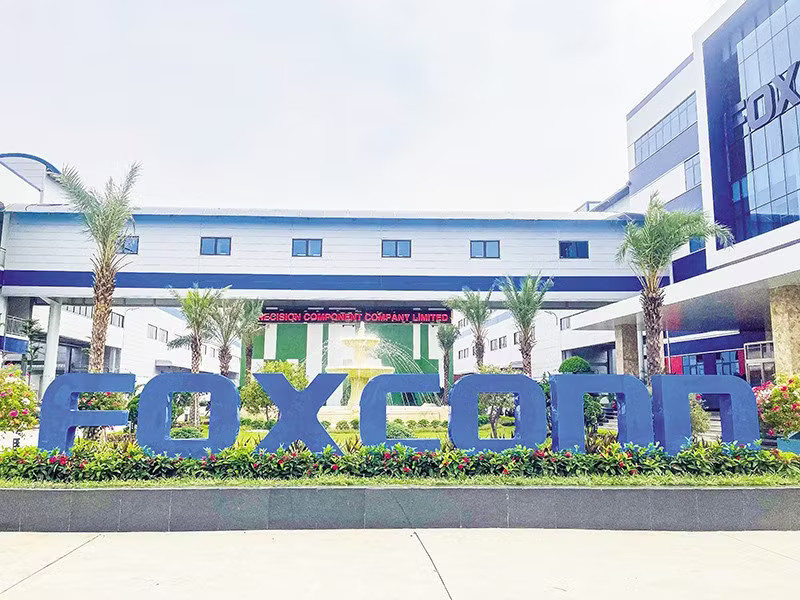
The PM said Vietnam is now a major investment destination for global technology groups, especially in electronics, semiconductors and high technology. He cited Samsung (over 24 billion USD), LG (10.6 billion USD), Foxconn (5 billion USD), Intel (4.1 billion USD), Amkor (1.6 billion USD), plus the US’s NVIDIA, Qualcomm, Marvell and Synopsys, all from APEC member economies.
The investments underscore Vietnam’s growing role in semiconductor packaging and advanced substrates.
If the plans materialise, FDI will add production capacity and support growth. It will also pull Vietnamese firms deeper into global supply chains, generating spillovers under the Politburo’s Resolution 10-NQ/TW on developing foreign-invested economy.
Minister of Finance Ngo Van Tuan told NA deputies that Samsung has been asked to connect with Vietnamese research institutes and universities, push innovation and technology transfer, and select Vietnamese firms for its chain.
Deepening investment cooperation
General Secretary of the Communist Party of Vietnam Central Committee and President To Lam is attending the 33rd APEC Economic Leaders’ Week and conduct bilateral engagements in China from November 17-20.
Speaking to the press, Standing Deputy Minister of Foreign Affairs Nguyen Minh Vu said the trip holds special significance for economic opening, trade and investment facilitation, and new momentum for regional economic cooperation and connectivity.
Opportunities for investment cooperation between Vietnam and APEC members are expanding. Deeper investment cooperation matters as Vietnam targets double-digit growth and overhauls its growth model.
Kim said he expects the next decade of RoK-Vietnam cooperation to be shaped not only by assembly lines but by research behind lab doors.
Japan, one of Vietnam’s top investment partners, is gradually becoming a “co-development partner” rather than just an investor.
During the top Vietnamese leader’s recent official visit to Japan, the two sides signed 11 cooperation documents in strategic fields, including energy infrastructure, nuclear power and artificial intelligence. Companies also reached 60 cooperation deals.
At the Vietnam-Japan Public-Private Forum on Economic, Science and Technology Cooperation, themed “Co-creating Technology, Co-building Future Value Chains”, he said Vietnam and Japan are not only trusted partners today but are fully equipped to become co-creators of the future.
Japan has strengths in technology, finance, governance, quality standards and global market networks. Meanwhile, Vietnam has dynamic workforce, a promising market, an important position in the regional production network and a strong development aspiration. The combination of these complementary strengths will create new growth momentum for both economies, he said./.