

2026 Annual International Forum on Public Governance opens in Hanoi
Vietnam is reforming its organisational apparatus, operating a two-tier local administration system, promoting decentralisation and delegation of power, and accelerating digital transformation. These are not merely organisational changes, but a systemic transformation requiring comprehensive innovation, from problem identification and policy design to coordination and implementation.
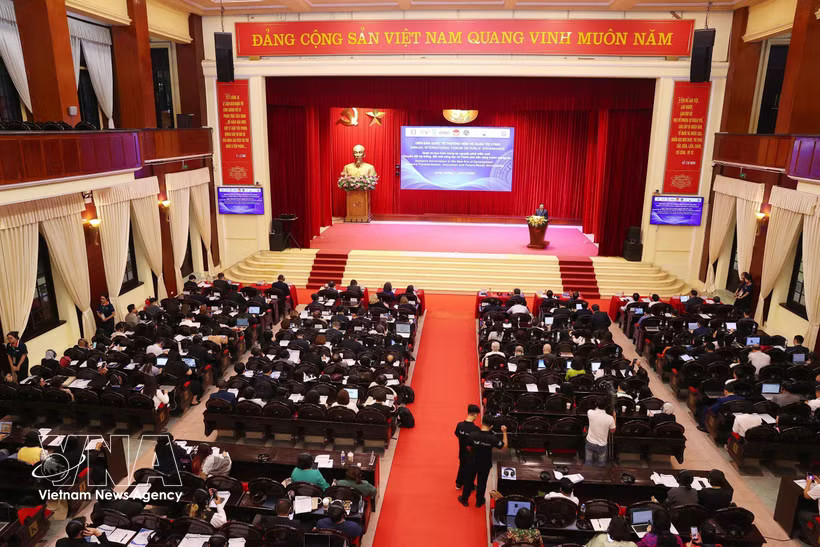
Hanoi (VNA) – The 2026 Annual International Forum on Public Governance opened in Hanoi on October 5 under the theme “Inclusive Governance in the New Era of Development: System Transformation, Innovation, and Future-Ready Government”.
Hosted by the Ho Chi Minh National Academy of Politics (HCMA) and organised by the Academy of Public Administration and Governance, the three-day forum brings together more than 500 delegates, including nearly 300 international participants, ambassadors, representatives of diplomatic missions and international organisations, experts, scholars and authors from more than 20 countries and territories, as well as leaders of central agencies, local administrations, academies, universities, research institutes and businesses in Vietnam.
In his opening remarks, Associate Professor Dr. Nguyen Manh Hung, HCMA Vice President and Vice Chairman of the Central Council for Theoretical Studies, said Vietnam is reforming its organisational apparatus, operating a two-tier local administration system, promoting decentralisation and delegation of power, and accelerating digital transformation.
He stressed that these are not merely organisational changes, but a systemic transformation requiring comprehensive innovation, from problem identification and policy design to coordination and implementation. It also calls for stronger links among the State, the market and society, with shared responsibilities and common development goals.
Hung said a government's capacity is demonstrated not only by its ability to address today's problems, but also by its ability to spot changes early, prepare for future challenges, and seize emerging opportunities.
He called for anticipatory governance that identifies changes and prepares early, while paying attention to “weak signals” - subtle signs that may foreshadow major changes, regularly reviewing familiar assumptions, developing multiple scenarios and testing policy resilience under different circumstances.
According to Hung, the more a country reforms, the more firmly it must uphold inclusiveness. People should not only use public services, but also participate in policy formulation, implementation and oversight. A future-ready government must help people prepare for the future through education, retraining and adaptive social protection.
Associate Professor Dr. Nguyen Ba Chien, President of the Academy of Public Administration and Governance, said inclusive governance puts people and society at the centre of development, adding that changes in organisational structures, authority, procedures, and technology matter only when they improve the ability to address practical issues.
As the new organisational apparatus, two-tier local administration, decentralisation and delegation of power, and digital transformation become operational, attention should be paid to matching authority with the conditions to exercise it, clearly defining responsibilities, ensuring seamless coordination, handling emerging issues promptly and improving services for people and businesses.
According to Chien, governance capacity today is fundamentally the capacity to solve problems amid constant change. Public issues are becoming more complex, cross-sectoral and multi-level, while evolving under the impact of technology, climate change, economic models, employment trends and emerging risks. This requires the ability to identify problems, use data and evidence, coordinate action and make timely adjustments.
Beyond compliance with laws, authorities and procedures, governance quality must be reflected in practical outcomes: problems are resolved, service quality improves, social costs decline, and development opportunities expand.
Professor Dr. Nguyen Xuan Thang, Chairman of the Central Council for Theoretical Studies, said that in an increasingly complex and interconnected economy, the State needs to strengthen its capacity to set priorities, promote coordination across sectors, address emerging issues and adjust policies based on practical experience.
Reforming national governance must help translate strategic choices into development outcomes and build the national capabilities needed to achieve the country's 2045 development goals, he said.
Thang highlighted four strategic orientations for Vietnam's national governance reform in the new development era. They are strengthening the State's capacity to enable development, building high-quality institutions, strengthening strategic learning capacity and national self-reliance, and developing people and social capacity as the long-term foundation of national strength.
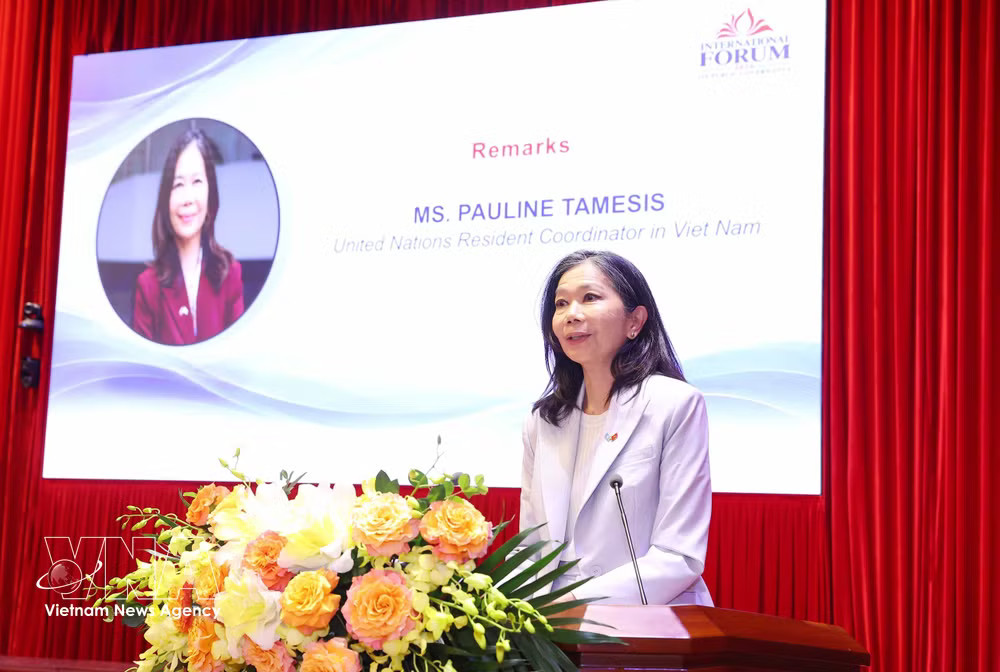
UN Resident Coordinator in Vietnam Pauline Tamesis said the future of public governance would not be shaped solely by the technologies being adopted, but also by the human values guiding their use.
If institutional transformation is grounded in fairness, transparency and a commitment to protecting human rights, countries can build governments capable of keeping pace with change while proactively shaping a fairer and more resilient future, she said.
At the forum, delegates focused on key questions including how to integrate forecasting and scenario planning into government operations, what mechanisms can enable the system to learn and innovate while maintaining discipline and accountability, and how each country's adaptive capacity can strengthen the world's collective ability to respond to challenges./.